
Ilosone (Erythromycin)

Dosages
Ilosone 250 mg
| Quantity | Price per tablet | Total price | |
|---|---|---|---|
| 60 | $0.97 | $58.00 | |
| 90 | $0.91 | $82.00 |
Ilosone 500 mg
| Quantity | Price per tablet | Total price | |
|---|---|---|---|
| 30 | $1.80 | $54.00 | |
| 60 | $1.62 | $97.00 | |
| 90 | $1.37 | $123.00 |
Payment & Shipping
Your order is carefully packed and ships within 24 hours. Here is what a typical package looks like.
Sized like a regular personal letter (9.4x4.3x0.3 inches), with no indication of what is inside.



| Shipping Method | Estimated delivery |
|---|---|
| Express Free for orders over $300.00 | Estimated delivery to the U.S.: 4-7 days |
| Standard Free for orders over $200.00 | Estimated delivery to the U.S.: 14-21 days |









Discount Coupons
- Independence Day - July 4, 2026 10% JULY410
- Labor Day - September 7, 2026 7% LABOR07
- Thanksgiving - November 26, 2026 9% THANKS09
Brand Names
| Country | Brand Names |
|---|---|
 Australia Australia | E-Mycin EES Erythrocin Ilocap |
 Austria Austria | Erythrocin |
 Belgium Belgium | Erythrocine Erythroforte Macromycine |
 Canada Canada | Apo-Erythro Diomycin E-Mycin EES Erybid Eryc Erythrocin Erythromid Ilotycin Novo-Rythro PCE Staticin T-Stat |
 Denmark Denmark | Abboticin |
 Finland Finland | Abboticin |
 France France | Abboticine |
 Germany Germany | Erythrocin InfectoMycin |
 Greece Greece | Erythrocin |
 Hong Kong Hong Kong | Apo-Erythro E-Mycin EES Eryc Erythrocin PCE Servitrocin |
 Ireland Ireland | Erythrocin Erythromid Primacine |
 Israel Israel | Erytab Erythro-Teva Erythrocin |
 Malaysia Malaysia | EES Erythrocin |
 Mexico Mexico | Ilosin |
 United Kingdom United Kingdom | Arpimycin Erycen Erymax Erythrocin Erythromid Tiloryth |
 United States United States | Del-Mycin E-Base E-Mycin EES Ery-Tab Eryc Erymax Erythrocin Ilotycin PCE Staticin T-Stat Wyamycin |
| Manufacturer | Brand Names |
|---|---|
| Abbott Laboratories | Erythrocin |
Description
Erythromycin is a macrolide antibiotic used to treat infections caused by susceptible bacteria. It is available in multiple dosage forms (oral, IV, and topical), and approved uses and directions can differ by product.
Important: Always follow the instructions on your specific product label and your prescriber's guidance.
Uses and Administration
Erythromycin is a macrolide antibacterial with a wide spectrum of activity that has been used in the treatment of a wide range of infections caused by susceptible organisms.
When taken by mouth (for example, as tablets, including delayed-release tablets), erythromycin is used to treat certain bacterial infections such as mild to moderate infections of the upper and lower respiratory tract, some skin and soft tissue infections, and other infections when a macrolide antibiotic is appropriate. It may also be used in selected situations such as treatment of streptococcal pharyngitis in patients who cannot take penicillin, or for prevention of recurrent rheumatic fever in penicillin-allergic patients, when directed by a clinician.
Note: Approved indications and dosing depend on the specific erythromycin product and formulation. Erythromycin treats bacterial infections only and will not work for viral illnesses (such as colds or flu).
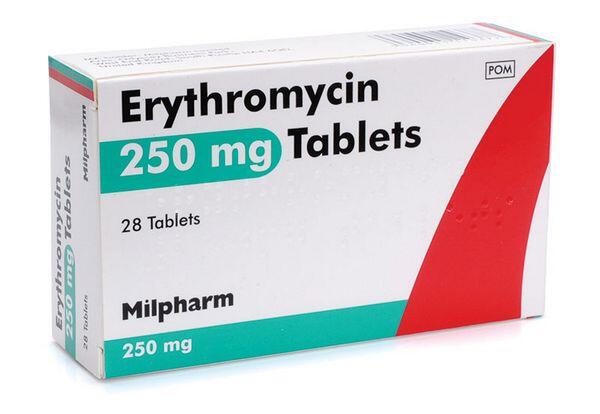
For eye use, erythromycin is commonly supplied as a sterile ophthalmic ointment (often called erythromycin ophthalmic ointment or erythromycin eye ointment). In the US, erythromycin is typically available as an ointment for ophthalmic use rather than an FDA-approved “erythromycin eye drops” solution—do not substitute drops for ointment unless specifically prescribed.
Other routes
Erythromycin ophthalmic ointment (0.5%) is used for superficial ocular infections involving the conjunctiva and/or cornea caused by susceptible organisms, and it is also used for neonatal ocular prophylaxis. For infections, an approximately 1 cm (about 1/2 inch) ribbon of ointment may be applied to the affected eye(s) up to 6 times daily, depending on severity; for newborn prophylaxis, a 1 cm ribbon is placed into each lower conjunctival sac as directed by the product label.
For eyelid margin infections such as a stye (hordeolum), clinicians may recommend warm compresses and may prescribe erythromycin ophthalmic ointment to the lid margin when a bacterial component is suspected; ophthalmic ointment is generally preferred over “drops” for this purpose.
It may also be applied topically as a 2 to 4% gel or solution for the treatment of acne vulgaris.
Administration in children
The usual dose for infants and children is the equivalent of about 30 to 50 mg/kg of erythromycin daily in 2 to 4 divided doses although it may be doubled in severe infections.
Decreased gastrointestinal motility
Erythromycin stimulates gut motility, apparently by acting as a motilin receptor agonist. Use for gastrointestinal stasis/prokinetic effect is not an approved indication for many products and, where used, should be considered off-label and guided by a clinician.
Skin disorders
ACNE
Erythromycin may be used topically or orally in the treatment of acne.
To help limit antibiotic resistance, topical antibiotics should not be used as monotherapy and should generally be limited in duration; they are typically combined with benzoyl peroxide and/or a topical retinoid, with reassessment after about 12 weeks.
Do not use skin (topical) erythromycin ointment in the eye. Eye products should be labeled for ophthalmic use (e.g., “ophthalmic ointment”).
Oral erythromycin may be used as an alternative to a tetracycline in moderate acne. However, resistance to erythromycin is increasing so it may be best reserved for those patients in whom other antibacterials are unsuitable.
Precautions
Erythromycin and its derivatives should be avoided in those known to be hypersensitive to it, or in those who have previously developed jaundice. All forms of erythromycin should be used with care in patients with existing liver disease or hepatic impairment, and the estolate is best avoided in such patients; liver function should be monitored. Repeated courses of the estolate or use for longer than 10 days increases the risk of hepatotoxicity.
The lactobionate should be used with caution in patients with severe renal impairment; dosage reduction may be necessary particularly in those who develop toxicity. A reduced dose of the estolate has also been recommended in severe renal impairment. Erythromycin may aggravate muscle weakness in patients with myasthenia gravis.
Erythromycin should be used with care in patients with a history of arrhythmias or a predisposition to QT interval prolongation. Certain medications may also increase the risk of arrhythmias (see Interactions, below).
Erythromycin may interfere with some diagnostic tests including measurements of urinary catecholamines and 17-hydroxycorticosteroids. It has also been associated with falsely-elevated serum aspartate aminotransferase values when measured colorimetrically, although genuine elevations of this enzyme, due to hepatotoxicity, also occur, particularly with the estolate. Erythromycin is irritant; solutions for parenteral use should be suitably diluted and given by intravenous infusion over 20 to 60 minutes to reduce the incidence of thrombophlebitis. Rapid infusion is also more likely to be associated with arrhythmias or hypotension.
Breastfeeding
There has been a report of a breastfed infant who developed pyloric stenosis thought to be associated with use of erythromycin by the mother.
A milk-to-plasma ratio of about 0.5 has been reported for erythromycin, but values may vary. In general, erythromycin is considered compatible with breastfeeding; monitor the infant for gastrointestinal effects and seek medical advice if concerns arise.
Porphyria
Erythromycin has been associated with acute attacks of porphyria in case reports; use caution in patients with porphyria and follow clinical guidance.
Pregnancy
Of 298 pregnant women who took erythromycin estolate, clindamycin, or placebo for 3 weeks or longer, about 14, 4, and 3% respectively had abnormally high serum aspartate aminotransferase values. Erythromycin estolate should generally be avoided in pregnancy unless clearly needed. (Pregnancy risk information may differ by formulation; follow your product labeling.)
Interactions
Erythromycin and other macrolides have the potential to interact with a large number of drugs through their action on hepatic cytochrome P450 isoenzymes, primarily CYP3A4. Such interactions can result in severe adverse effects, including serious cardiac arrhythmias with certain contraindicated medicines.
Erythromycin is contraindicated in patients taking terfenadine, astemizole, cisapride, pimozide, ergotamine, or dihydroergotamine, and should not be used concomitantly with lovastatin or simvastatin due to the increased risk of myopathy (including rhabdomyolysis). Check your product labeling for the full list of contraindications and clinically significant interactions.
Cimetidine
Cimetidine may increase plasma concentrations of erythromycin and deafness occurred in a patient taking both drugs.
Adverse Effects
Erythromycin and its salts and esters are generally well tolerated and serious adverse effects are rare. Gastrointestinal disturbances such as abdominal discomfort and cramp, nausea, vomiting, and diarrhea are fairly common after both oral and parenteral use, probably because of the stimulant activity of erythromycin on the gut. Gastrointestinal effects are dose related and appear to be more common in young than in older patients.
Superinfection with resistant organisms may occur and Clostridioides difficile-associated diarrhea/colitis has been reported. Hypersensitivity reactions appear to be uncommon, having been reported in about 0.5% of patients, and include pruritus, urticaria, and skin rash as well as occasional cases of anaphylaxis. Stevens-Johnson syndrome and toxic epidermal necrolysis have also been reported very rarely. Hypersensitivity or irritation may occur after topical application of erythromycin.
A hypersensitivity reaction is thought to be responsible for the hepatotoxicity sometimes reported in patients receiving erythromycin or its derivatives but this has been disputed by some. Most reports of cholestatic hepatitis have been in patients receiving the estolate, and it has been suggested that the propionyl ester linkage is particularly associated with hepatotoxicity, but symptoms have also been reported in patients given the base and most of the other derivatives, both orally and parenterally.
Symptoms indicative of cholestasis, including upper abdominal pain (sometimes very severe), nausea and vomiting, abnormal liver function values, raised serum bilirubin, and usually jaundice, may be accompanied by rash, fever, and eosinophilia. Symptoms usually occur in patients who have been taking the drug for more than 10 days, although they may develop more quickly in patients given the drug previously. Hepatic dysfunction seems to be rare in children under 12 years of age.
The effects of erythromycin on the liver are generally reversible on stopping treatment. Erythromycin may interfere with tests for serum aspartate aminotransferase, which might make diagnosis of hepatotoxicity more difficult.
A generally reversible sensorineural deafness, sometimes with tinnitus, has been reported in patients given erythromycin and appears to be related to serum concentration, with an increased likelihood of such effects in patients given doses of 4 g or more daily of base or its equivalent, in those given intravenous therapy, and in those with renal or hepatic impairment.
Other adverse effects that have been reported in patients given erythromycin include agranulocytosis, aggravation of muscular weakness in myasthenia gravis patients, and pancreatitis. Prolongation of the QT interval and other arrhythmias, sometimes fatal, including torsade de pointes have been reported particularly with intravenous use. There have also been isolated reports of transient CNS adverse effects including confusion, hallucinations, seizures, and vertigo.
Parenteral formulations of erythromycin are irritant and intravenous dosage may produce thrombophlebitis, particularly at high doses. Intramuscular injection is generally avoided as it may produce severe pain.
Effects on the cardiovascular system
QT prolongation and torsade de pointes have been reported with erythromycin, particularly with intravenous use and in patients with additional risk factors and/or interacting medicines.
Effects on the gastrointestinal tract
Comparison in patients with upper respiratory-tract infections has suggested that erythromycin ethyl succinate may be associated with less abdominal pain than an equivalent dosage of erythromycin base. Another study has indicated that there was no significant difference in gastrointestinal symptoms between plain and enteric-coated formulations of erythromycin base.
Severe nausea and vomiting after rapid intravenous infusion of erythromycin lactobionate stopped in 2 patients who transferred to oral erythromycin base or ethyl succinate. However, the adverse effects may have been due to the rate of infusion, since in 2 further patients symptoms resolved when the lactobionate was given more slowly as a more dilute solution. There have been a number of studies suggesting an association between erythromycin use in very young infants and infantile hypertrophic pyloric stenosis, particularly with exposure in the first 14 days of life.
Effects on the neonate
For a suggestion that erythromycin or other macrolides might be associated with an increased risk of infantile hypertrophic pyloric stenosis in neonates, see under Effects on the Gastrointestinal Tract, above.
Effects on the skin
Skin reactions ranging from mild eruptions to erythema multiforme, Stevens-Johnson syndrome, and toxic epidermal necrolysis have rarely been reported with macrolides.
Overdosage
Acute pancreatitis was reported in a 12-year-old girl after ingestion of about 5 g of erythromycin base. Transient pancreatitis has also been reported in another 15-year-old girl who took 5.328 g of erythromycin base. Erythromycin produces contraction of the sphincter of Oddi resulting in reflux of bile into the pancreas but the resulting pancreatitis is self-limited and remits when sphincter tone returns to normal after the erythromycin is eliminated from the body.
Antimicrobial Action
Erythromycin is a macrolide antibacterial with a broad and essentially bacteriostatic action against many Gram-positive and to a lesser extent some Gram-negative bacteria, as well as other organisms including some Mycoplasma spp., Chlamydiaceae, Rickettsia spp., and spirochaetes.
Mechanism of action
Erythromycin and other macrolides bind reversibly to the 50S subunit of the ribosome, resulting in blockage of the transpeptidation or translocation reactions, inhibition of protein synthesis, and hence inhibition of cell growth. Its action is mainly bacteriostatic, but high concentrations are slowly bactericidal against the more sensitive strains.
The actions of erythromycin are increased at moderately alkaline pH (up to about 8.5), particularly in Gram-negative species, probably because of the improved cellular penetration of the non-ionized form of the drug.
Resistance
A meta-analysis found that reported macrolide resistance in Streptococcus pneumoniae varied greatly from country to country. The percentage of erythromycin-resistant Streptococcus pneumoniae in the USA (20.7%) was less than that in Europe (32.0%) although this difference was not considered statistically significant, and higher levels of resistance were found in Asia (57.3%).
Pharmacokinetics
Erythromycin base is unstable in gastric acid, and absorption is therefore variable and unreliable. Consequently, the base is usually given in film- or enteric-coated preparations, or one of the more acid-stable salts or esters is used. Food may reduce absorption of the base or the stearate, although this depends to some extent on the formulation.
Peak plasma concentrations generally occur between 1 and 4 hours after a dose and have been reported to range from about 0.3 to 1.0 mcg/mL after 250 mg of erythromycin base, and from 0.3 to 1.9 mcg/mL after 500 mg. Similar concentrations have been seen after equivalent doses of the stearate.
Higher total concentrations are achieved after oral doses of the estolate or ethyl succinate, but only about 20 to 30% of estolate or 55% of ethyl succinate is present as the active base, the rest being present as the inactive ester (in the case of the estolate as the propionate). Peak concentrations of about 500 ng/mL of erythromycin base have been reported after 250 mg of the estolate or 500 mg of the ethyl succinate.
If you are prescribed erythromycin, take it exactly as directed and do not skip doses. For antibiotics, completing the full course helps reduce the risk of treatment failure and resistance. Seek medical help right away for severe allergic reactions, severe diarrhea, or symptoms of heart rhythm problems (such as fainting or palpitations).