Bactroban Ointment 5 g

Bactroban
4.77 ratingsReviews
Generic:
Mupirocin
Indications:
skin infections
Analogs:
Mupirocin Fusidic Acid Fucidin Retapamulin Altabax Ozenoxacin Xepi Centany Neosporin Polysporin Bacitracin
Bactroban Ointment contains the active ingredient mupirocin 2% (20 mg/g), a topical antibiotic. You can place an order and buy mupirocin 2% topical ointment (5 g) online over the counter today at the lowest prices.
In stock: 15 packs
AdultsPregnancyAllergiesDiabetesBreastfeedingChildrenDriving

Dosages

Bactroban 20 mg

Quantity Price per tube You save Total price
2 $36.80 - $73.60
3 $33.30 $10.50 $99.90
4 $31.35 $21.80 $125.40
5 $30.54 $31.30 $152.70
6 $29.80 $42.00 $178.80
7 $29.36 $52.10 $205.50
8 $29.04 $62.10 $232.30
9 $28.08 $78.50 $252.70
10 $26.60 $102.00 $266.00

Manufacturers

Cipla LimitedGlaxoSmithKlineInfectoPharm Arzneimittel und Consilium GmbHLaboratoires BailleulMedimetriks Pharmaceuticals, Inc.Taro Pharmaceuticals Inc.

Payment & Shipping

Package Example

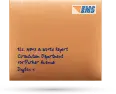
Your order is carefully packed and ships within 24 hours. Here is what a typical package looks like.

Sized like a regular personal letter (9.4x4.3x0.3 inches), with no indication of what is inside.

Front View
Front View
Side View
Side View
Back View
Back View
Shipping Times
Shipping MethodEstimated delivery
Express Free for orders over $300.00Estimated delivery to the U.S.: 4-7 days
Standard Free for orders over $200.00Estimated delivery to the U.S.: 14-21 days
EMSUSPS
Payment Methods
VisaMastercardAmerican ExpressDiscoverBitcoin, USDTApple PayGoogle PayPayPal

Discount Coupons

  • Independence Day - July 4, 2026 10% JULY410
  • Labor Day - September 7, 2026 7% LABOR07
  • Thanksgiving - November 26, 2026 9% THANKS09

Brand Names

Also known as (by country):
CountryBrand Names
United States
Centany

FAQ

In the United States, mupirocin ointment requires a prescription when purchased from a local pharmacy. Our store policy allows you to order it without a prescription and have it sent by mail.

Apply the missed dose when you remember, unless it is almost time for the next application. In that case, skip the missed application and return to the usual schedule. Do not apply extra ointment to make up for a missed dose.

Not necessarily. Products with mupirocin can differ in their ointment base and other inactive ingredients, even when the active ingredient and strength are the same. The exact inactive ingredients of the supplied tube should be checked on its package label or leaflet, especially if there is a known excipient allergy.

During pregnancy, use mupirocin ointment only after a clinician has weighed the expected benefit against the potential risk, because human pregnancy data are limited. During breastfeeding, caution is advised; if it is applied to the breast or nipple area, wash it off thoroughly before nursing so the infant does not ingest the ointment.

Mupirocin 2% ointment is for use on the skin. A small amount is usually applied to the affected area three times daily for up to 10 days; follow the directions provided for the infection being treated. Wash hands before and after application unless the hands are the treated area, and avoid getting the ointment in the eyes, nose, mouth, or on large areas of damaged skin unless specifically directed.

Description

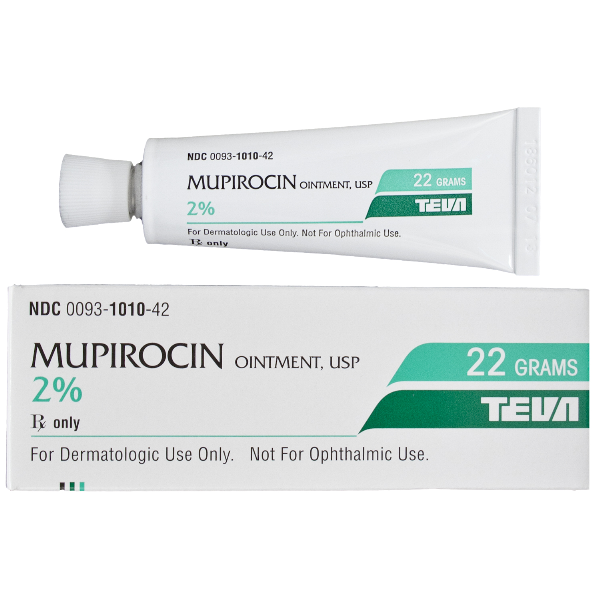
Note: Images in the description are provided for informational purposes and may differ from the actual appearance of the product. Please refer to the product name, strength, ingredients, and dosage form.

Mupirocin is a topical antibiotic used to treat certain bacterial skin infections and to help clear nasal carriage of Staphylococcus aureus in specific cases. It works locally on the skin and is generally absorbed only in very small amounts, which helps limit systemic effects. To reduce the risk of resistance, it should be used exactly as prescribed and for the recommended duration.

Mupirocin

Adverse Effects and Precautions

Mupirocin is usually well tolerated, but local reactions such as burning, stinging, and itching may occur after application to the skin. Some mupirocin products are formulated in a macrogol base; such formulations are not suitable for application to mucous membranes and should be used with caution in patients with extensive burns or wounds because of the possibility of macrogol toxicity. Care is also required in patients with renal impairment.

Antimicrobial Action

Mupirocin is an antibacterial that inhibits bacterial protein synthesis by binding to isoleucyl transfer RNA synthetase. It is mainly bacteriostatic at low concentrations, although it is usually bactericidal at the high concentrations achieved by topical application to the skin. At these concentrations, it may have some activity against organisms reported to be relatively resistant to mupirocin in vitro. It is mainly active against Gram-positive aerobes.

Most strains of staphylococci (including methicillin-resistant and multiply resistant Staph. aureus) and streptococci are susceptible in vitro, although the enterococci are relatively resistant. Mupirocin is also active against Listeria monocytogenes and Erysipelothrix rhusiopathiae. The Gram-negative organisms are generally insensitive, but Haemophilus influenzae, Neisseria spp., and a few others are sensitive.

Anaerobic organisms, both Gram-positive and Gram-negative, are generally resistant, and activity against fungi is low. Mupirocin is more active in vitro at acidic pH than under alkaline conditions. Naturally resistant strains of Staph. aureus occur rarely, but resistance, including high-level plasmid-mediated transferable resistance, has emerged, particularly during long-term use. There has been some concern that inappropriate prescribing of mupirocin has led to steadily increasing resistance.

Activity against fungi

Activity of mupirocin 2% in vitro against Candida albicans was comparable to that of other commonly used topical antifungals. Although MICs were considerably in excess of those reported for susceptible bacteria, clinical responses in 10 patients suggested that adequate concentrations of mupirocin were achieved after topical application.

Pharmacokinetics

Only very small amounts of topically applied mupirocin are absorbed into the systemic circulation, where it is rapidly metabolized to monic acid, which is excreted in the urine.

Uses and Administration

Mupirocin is an antibacterial produced by Pseudomonas fluorescens. It is applied topically as a 2% ointment in a macrogol base, or as a cream containing mupirocin calcium equivalent to 2% mupirocin, in the treatment of various bacterial skin infections. These preparations should be applied up to 3 times daily for up to 10 days; treatment should be re-evaluated if there is no response after 3 to 5 days.

These preparations are not suitable for application to mucous membranes; therefore, a nasal ointment containing mupirocin calcium equivalent to 2% mupirocin in a paraffin base is used for eradication of the nasal carriage of Staphylococcus aureus, particularly epidemic methicillin-resistant strains.

The nasal ointment should be applied into each nostril 2 or 3 times daily for a maximum of 7 days.

Medically reviewed by
Donna Brettler
BPharm, MPH - Pharmacologist and medical writer
Updated August 11, 2026

Customer questions

Asked by Lauren M., Dallas, United States

I'm in Dallas. Can I check whether mupirocin ointment can be shipped to my ZIP code before I place an order?

Answered by Support team

Yes. Enter your Dallas ZIP code during checkout to see whether this product is available for shipping to your address. Availability can vary by destination.

Asked by Marcus T., New York, United States

I used mupirocin in a different form before. What form do you sell?

Answered by Support team

Our listing is for mupirocin ointment for topical use. The available strength is 2% (20 mg/g).

Asked by Kevin R., San Jose, United States

My order arrived. Where on the tube should I confirm that I received the right medicine and strength?

Answered by Support team

Check the tube and outer package for "mupirocin" as the active ingredient, "ointment" as the dosage form, and 2% (20 mg/g) as the strength. Also compare the manufacturer name, lot number, and expiration date; do not use the product until any mismatch is resolved.

Asked by Danielle P., Boston, United States

I started using the ointment on a small skin infection and felt mild stinging where I applied it. Is that a known reaction?

Answered by Support team
Medical reviewed by Brian Holtry

Mild burning, stinging, itching, or redness at the application site can occur with mupirocin ointment. Stop using it and seek prompt medical care for hives, facial swelling, trouble breathing, a spreading rash, or severe skin irritation.

Product specifications

Active ingredientMupirocin
Drug classTopical antibiotic
Dosage formOintment
Available strengths2% (20 mg/g)
RouteTopical
StorageStore at 68°F to 77°F; excursions permitted from 59°F to 86°F. Do not freeze.
ATC codeD06AX09

Regulatory information

Approval StatusThis medication is approved for human use in the United States.
Prescription RequirementMupirocin ointment is classified as a prescription-only medicine in the United States.

More information