
Cleocin (Clindamycin)

Dosages
Cleocin 150 mg
| Quantity | Price per tablet | Total price | |
|---|---|---|---|
| 30 | $3.03 | $91.00 | |
| 60 | $2.42 | $145.00 | |
| 90 | $2.22 | $200.00 | |
| 120 | $2.11 | $253.00 | |
| 180 | $2.01 | $361.00 |
Payment & Shipping
Your order is carefully packed and ships within 24 hours. Here is what a typical package looks like.
Sized like a regular personal letter (9.4x4.3x0.3 inches), with no indication of what is inside.



| Shipping Method | Estimated delivery |
|---|---|
| Express Free for orders over $300.00 | Estimated delivery to the U.S.: 4-7 days |
| Standard Free for orders over $200.00 | Estimated delivery to the U.S.: 14-21 days |









Discount Coupons
- Independence Day - July 4, 2026 10% JULY410
- Labor Day - September 7, 2026 7% LABOR07
- Thanksgiving - November 26, 2026 9% THANKS09
Brand Names
| Country | Brand Names |
|---|---|
 Austria Austria | Dalacin C |
 Belgium Belgium | Dalacin C |
 Brazil Brazil | Dalacin C |
 Canada Canada | Dalacin C |
 Croatia Croatia | Dalacin Klimicin |
 Czechia Czechia | Dalacin C |
 Denmark Denmark | Dalacin |
 Estonia Estonia | Dalacin |
 Finland Finland | Dalacin |
 Hong Kong Hong Kong | Dalacin C |
 Iceland Iceland | Dalacin |
 Ireland Ireland | Dalacin C |
 Latvia Latvia | Dalacin |
 Lithuania Lithuania | Dalacin |
 Luxembourg Luxembourg | Dalacin C |
 Malaysia Malaysia | Dalacin C |
 Mexico Mexico | Dalacin C |
 Netherlands Netherlands | Dalacin C |
 Norway Norway | Dalacin |
 Pakistan Pakistan | Dalacin |
 Philippines Philippines | Dalacin C |
 Poland Poland | Dalacin Dalacin C |
 Russia Russia | Dalacin |
 Singapore Singapore | Dalacin C |
 Slovakia Slovakia | Klimicin |
 South Africa South Africa | Dalacin |
 Sweden Sweden | Dalacin |
 Switzerland Switzerland | Dalacin C |
 Thailand Thailand | Dalacin Dalacin C |
 United Kingdom United Kingdom | Dalacin C |
 Venezuela Venezuela | Dalacin |
Description
Clindamycin is a semisynthetic antibiotic and a derivative of lincomycin. It is active against most aerobic gram-positive cocci, including staphylococci, Streptococcus pneumoniae, and other streptococci (except Enterococcus faecalis, formerly S. faecalis).
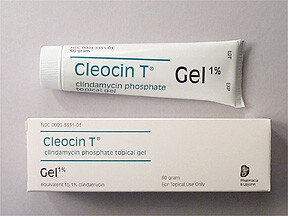
Clindamycin is effective in vitro against various bacteria, including gram-positive and anaerobic organisms. It targets pathogens such as Arcanobacterium haemolyticum, Actinomyces, Bacteroides, and Fusobacterium. Clindamycin also inhibits Prevotella, Porphyromonas, Mobiluncus, and some strains of Clostridium and Haemophilus influenzae.
In addition, it shows activity against Gardnerella vaginalis. It has some effect on Plasmodium in vitro. However, it is ineffective against Neisseria meningitidis, Enterobacteriaceae, fungi, and most strains of Clostridioides difficile (formerly Clostridium difficile). The minimum inhibitory concentration (MIC) for clindamycin typically ranges from 0.04 to 4 mcg/mL for susceptible strains of staphylococci, streptococci, and anaerobic bacteria.
Pharmacokinetics
Clindamycin may be bacteriostatic or bactericidal, depending on the drug concentration at the site of infection and the susceptibility of the infecting organism. Clindamycin palmitate hydrochloride and clindamycin phosphate are inactive until hydrolyzed to free clindamycin; this hydrolysis occurs rapidly in vivo. Clindamycin appears to inhibit protein synthesis in susceptible organisms by binding to 50S ribosomal subunits; the primary effect is inhibition of peptide bond formation. The site of action appears to be the same as that of erythromycin, chloramphenicol, lincomycin, oleandomycin, and troleandomycin.
Absorption
About 90% of oral clindamycin hydrochloride is rapidly absorbed after being converted to active clindamycin in the GI tract. Serum concentrations rise linearly with dosage and are minimally affected by food, though peak levels may be delayed. After a 150 mg dose, peak serum levels average 1.9-3.9 mcg/mL within 45-60 minutes.
Clindamycin phosphate is quickly hydrolyzed to active clindamycin after IM or IV administration. Peak serum concentrations occur within 3 hours in adults and within 1 hour in children.
Distribution
Clindamycin distributes widely in body tissues and fluids but penetrates the CSF poorly. Concentrations in synovial fluid and bone are about 60-80% of serum levels. It crosses the placenta and is present in breast milk; approximately 93% is bound to serum proteins.
Elimination
The serum half-life is typically 2-3 hours in adults and children and may be prolonged in patients with renal or hepatic impairment. In neonates, half-life varies by age and weight. Clindamycin is partially metabolized and is excreted mainly in urine and feces. About 10% of an oral dose appears in urine within 24 hours as active drug and metabolites. Probenecid does not affect its excretion.
Uses
Before selecting clindamycin, the physician should consider the nature of the infection and the suitability of less toxic alternatives (e.g., erythromycin).
Clindamycin is used primarily to treat serious infections caused by susceptible gram-positive and anaerobic bacteria. Because of the risk of C. difficile-associated diarrhea and colitis, its use should be limited to serious infections when other less toxic antibiotics are unavailable. Clindamycin should not be used empirically for infections likely to be nonbacterial (e.g., certain upper respiratory tract infections). When appropriate, the causative organism should be cultured, and clindamycin does not replace the need for surgical intervention when indicated. It is ineffective for meningitis because it does not achieve adequate concentrations in the CNS.
Clindamycin is also indicated for serious infections due to susceptible strains of streptococci, pneumococci, and staphylococci. Its use should be reserved for penicillin-allergic patients or other patients for whom, in the physician's judgment, penicillin is inappropriate.
- Anaerobes: Serious respiratory tract infections such as empyema, anaerobic pneumonitis, and lung abscess; severe skin and soft tissue infections; septicemia; intra-abdominal infections such as peritonitis and intra-abdominal abscess (typically involving anaerobes resident in the normal GI tract); infections of the female pelvis and genital tract such as endometritis, nongonococcal tubo-ovarian abscess, pelvic cellulitis, and postsurgical vaginal cuff infection.
- Streptococci: Serious respiratory tract infections; severe skin and soft tissue infections.
- Staphylococci: Serious respiratory tract infections; severe skin and soft tissue infections.
- Pneumococci: Serious respiratory tract infections.
Bacteriologic studies should be performed to determine the causative organisms and their susceptibility to clindamycin.
To reduce the development of drug-resistant bacteria and maintain the effectiveness of Cleocin and other antibacterial drugs, Cleocin should be used only to treat or prevent infections that are proven or strongly suspected to be caused by susceptible bacteria. When culture and susceptibility information are available, they should be considered when selecting or modifying antibacterial therapy.
Administration
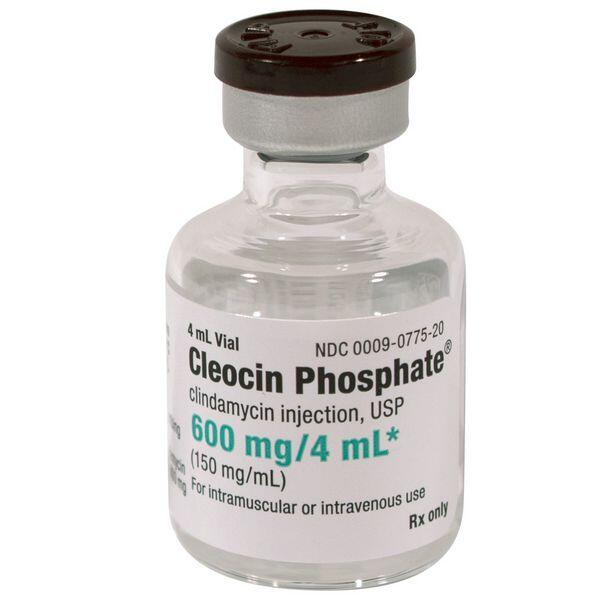
Clindamycin hydrochloride and clindamycin palmitate hydrochloride are administered orally. Clindamycin phosphate is administered by IM injection or by intermittent or continuous IV infusion.
Oral administration
Clindamycin hydrochloride capsules and clindamycin palmitate hydrochloride oral solution may be administered without regard to food. To reduce the risk of esophageal irritation, clindamycin hydrochloride capsules should be taken with a full glass of water.
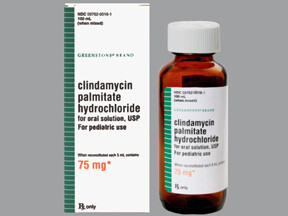
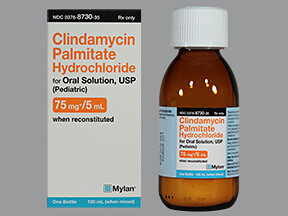
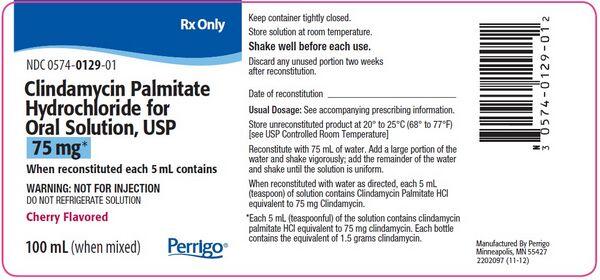
Clindamycin palmitate hydrochloride oral solution is reconstituted by adding 75 mL of water to the 100 mL bottle. Add most of the water initially and shake vigorously, then add the remaining water and shake until the solution is uniform. The resulting solution contains 75 mg of clindamycin per 5 mL.
Parenteral administration
Before IV administration, clindamycin phosphate injection (including injection contained in ADD-Vantage® vials) must be diluted with a compatible IV solution to a concentration not exceeding 18 mg/mL. For intermittent IV infusion, the diluted solution should be infused over at least 10-60 minutes at a rate not exceeding 30 mg/minute; the drug should not be administered IV undiluted as a bolus.
The manufacturers suggest that 300 or 600 mg doses be diluted in 50 mL of diluent and infused over 10 or 20 minutes, respectively; 900 mg doses be diluted in 50-100 mL and infused over 30 minutes; and 1.2 g doses be diluted in 100 mL and infused over 40 minutes. A maximum of 1.2 g should be given by IV infusion in a single 1-hour period.
As an alternative to intermittent IV infusion, clindamycin may be given by continuous IV infusion after the first dose has been given by rapid IV infusion. Commercially available clindamycin phosphate in 5% dextrose is administered by IV infusion. Inspect containers for leaks by firmly squeezing the bag and visually inspect solutions for particulate matter and discoloration when feasible. Discard the injection if the container seal is not intact, leaks are found, or the solution is not clear. Additives should not be introduced into the injection container.
The injection should not be used in series connections with other plastic containers because this may result in air embolism from residual air being drawn from the primary container before administration of fluid from the secondary container is complete.
Clindamycin phosphate pharmacy bulk packages are not intended for direct IV infusion; doses must be further diluted in a compatible IV infusion solution before administration. The bulk package is intended for use only in a laminar flow hood. Entry into the vial should be made using a sterile transfer set or other sterile dispensing device; multiple entries with a syringe and needle are not recommended due to increased risk of microbial and particulate contamination. Record the date and time the bulk package was opened on the vial.
After entry into a bulk package vial, the entire contents should be used promptly; any unused portion should be discarded within 24 hours after initial entry. The manufacturer of another clindamycin phosphate bulk package (Gensia) states that the contents should be used as soon as possible after initial entry, but within 4 hours; if not used immediately, the vial should be stored at room temperature under the laminar flow hood during this period.
Dosage
Dosage is expressed in terms of clindamycin and depends on the severity of infection and the susceptibility of the infecting organism. In serious anaerobic infections, parenteral clindamycin is usually used initially, and oral clindamycin may be substituted when the patient's condition warrants; however, in clinically appropriate circumstances, therapy may be initiated or continued with oral clindamycin. The duration of therapy depends on the type and severity of infection. If clindamycin is used for infections caused by group A beta-hemolytic streptococci, therapy should continue for at least 10 days. At least 6 weeks of therapy may be required for severe infections such as endocarditis or osteomyelitis.
Oral dosage
| Indication | Dosage |
|---|---|
| General adult dosage | 150-450 mg every 6 hours, depending on the type and severity of infection. |
| General pediatric dosage | 8-25 mg/kg daily, divided into 3 or 4 doses; minimum for ≤10 kg: 37.5 mg three times daily. |
| Bacterial vaginosis | 300 mg orally twice daily for 7 days (nonpregnant and pregnant women). |
| Prevention of bacterial endocarditis | Adults: 600 mg as a single dose; Children: 20 mg/kg as a single dose (not exceeding the adult dose). |
| Toxoplasmosis | Long-term suppressive therapy: 20-30 mg/kg daily in 4 doses with pyrimethamine and leucovorin. |
| Acne | Adults: 150 mg orally twice daily. |
| Malaria | Adults: 900 mg three times daily for 5 days; Children: 20-40 mg/kg daily in 3 doses. |
| Pharyngitis and tonsillitis | Children: 20-30 mg/kg daily for 10 days in 3 doses; Adults: 600 mg daily for 10 days in 2-4 doses. |
IM/IV adult dosage
| Indication | Dosage |
|---|---|
| General adult dosage | 600 mg to 2.7 g daily, divided into 2-4 doses; max single IM dose: 600 mg; max IV infusion: 1.2 g/hour. |
| Life-threatening infections | Up to 4.8 g daily via IV. |
| Serum concentration maintenance | IV infusion at 10 mg/min for 30 minutes, then 0.75 mg/min; or 15 mg/min for 30 minutes, then 1 mg/min; or 20 mg/min for 30 minutes, then 1.25 mg/min. |
| Pelvic inflammatory disease (PID) | 900 mg IV every 8 hours with gentamicin (2 mg/kg initially, then 1.5 mg/kg every 8 hours). |
| Pneumocystis jirovecii pneumonia | 600 mg IV every 6 hours or 300-450 mg orally every 6 hours for 21 days with primaquine (30 mg daily). |
| Prevention of perinatal GBS disease | 900 mg IV every 8 hours until delivery. |
| Prevention of bacterial endocarditis | Single dose of 600 mg IV within 30 minutes before the procedure. |
| Perioperative prophylaxis | 600-900 mg IV with gentamicin (1.5 mg/kg) prior to surgery; repeat if needed. |
| Anthrax treatment | 900 mg IV every 8 hours with ciprofloxacin and rifampin. |
| Babesiosis treatment | 1.2 g IV twice daily or 600 mg orally three times daily for 7-10 days with oral quinine (650 mg three times daily). |
| Dosage in renal and hepatic impairment | Dosage reduction may be needed in severe impairment; no adjustment is usually required for mild/moderate impairment. |
Side effects
Clindamycin is associated with a range of adverse effects. Gastrointestinal reactions (e.g., nausea, vomiting) and the risk of pseudomembranous colitis due to C. difficile overgrowth are among the most serious adverse reactions linked to systemic use.
GI effects
Adverse GI effects frequently occur with oral, IM, or IV clindamycin and may be severe enough to necessitate discontinuance. These effects include nausea, vomiting, diarrhea, abdominal pain, and tenesmus. In addition, flatulence, bloating, anorexia, weight loss, and esophagitis have occurred. An unpleasant or metallic taste has occurred occasionally following IV administration of high doses. Nonspecific colitis and diarrhea, as well as potentially fatal C. difficile-associated diarrhea and colitis (antibiotic-associated pseudomembranous colitis), have also occurred.
Diarrhea and colitis
C. difficile-associated diarrhea and colitis, especially when induced by clindamycin, may be marked by severe diarrhea and abdominal cramping and may include blood or mucus in stools. Symptoms often develop 2-9 days after starting clindamycin but can occur weeks later. In institutional settings, infection may be transmitted nosocomially, and asymptomatic carriers can be present.
Diagnosis may involve endoscopic examination to identify pseudomembranes when clinically indicated. Management generally includes discontinuing the offending antibiotic and providing supportive care (e.g., fluid and electrolyte replacement). In moderate to severe cases, targeted therapy (e.g., oral metronidazole or vancomycin) may be used based on clinical judgment and local guidance. Antidiarrheal agents may worsen the condition and should generally be avoided.
Dermatologic and sensitivity reactions
Generalized mild to moderate morbilliform rash is the most frequently reported adverse reaction to clindamycin. Maculopapular rash, urticaria, pruritus, fever, hypotension, and rarely polyarthritis have also occurred. A few anaphylactoid reactions have been reported. Rarely, erythema multiforme, sometimes resembling Stevens-Johnson syndrome, has occurred.
Local effects
Thrombophlebitis, erythema, and pain and swelling have occurred with IV administration. IM administration has caused pain, induration, sterile abscess, and reversible increases in serum creatine kinase (CK/CPK). Local reactions can be minimized by deep IM injections and by avoiding prolonged use of indwelling IV catheters.
Other adverse effects
Other reported adverse effects include transient increases in serum bilirubin, alkaline phosphatase, and AST (SGOT); transient leukopenia; neutropenia; eosinophilia; thrombocytopenia; and agranulocytosis. Rare occurrences of cardiopulmonary arrest and hypotension have been reported following overly rapid IV administration. Renal dysfunction (e.g., azotemia, oliguria, and/or proteinuria) has been observed rarely in patients receiving the drug.
Precautions and contraindications
Patients should be monitored for diarrhea, which may indicate severe colitis. If diarrhea is clinically significant or persistent, discontinuing the drug should be considered and alternative therapy evaluated. Older patients with severe illness may experience more severe effects and should be closely observed for bowel changes.
Routine tests for liver and renal function and blood cell counts are recommended during prolonged use due to the potential overgrowth of nonsusceptible organisms (particularly fungi). If hypersensitivity reactions occur, clindamycin should be discontinued immediately and appropriate therapy initiated.
Cleocin capsules contain tartrazine, which can cause allergic reactions in sensitive individuals. Use caution in patients with a history of GI disease and in those with severe renal or hepatic impairment; serum concentrations may need monitoring. Clindamycin is contraindicated in individuals with hypersensitivity to clindamycin or lincomycin. It is not suitable for CNS infections because it does not distribute adequately into the CNS.
Pediatric precautions
When clindamycin is administered to pediatric patients, organ system function should be monitored.
Each mL of clindamycin phosphate injection contains 9.45 mg of benzyl alcohol. Although a causal relationship has not been established, administration of injections preserved with benzyl alcohol has been associated with toxicity in neonates, particularly when large amounts (about 100-400 mg/kg daily) were administered. The American Academy of Pediatrics (AAP) states that the presence of small amounts of the preservative in a commercially available injection should not preclude its use when indicated in neonates.
Geriatric precautions
Clinical studies did not include sufficient numbers of patients 65 years and older to determine whether geriatric patients respond differently from younger patients. Clinical experience indicates that C. difficile-associated diarrhea and colitis may occur more frequently and be more severe in patients older than 60 years of age.
Therefore, geriatric patients receiving clindamycin should be carefully monitored for the development of diarrhea (e.g., changes in bowel frequency). Studies have not revealed clinically important differences in oral or parenteral clindamycin pharmacokinetics between younger adults and geriatric patients with normal hepatic function and normal (age-adjusted) renal function.
Pregnancy, fertility, and lactation
Clindamycin safety during pregnancy is not fully established because adequate, well-controlled studies in pregnant women are lacking. Animal studies have not shown significant fetal harm at high doses, but animal findings do not always predict human outcomes. Therefore, clindamycin should be used during pregnancy only when clearly needed.
Clindamycin does not appear to impair fertility or mating ability in rat studies.
Clindamycin is excreted in breast milk, with reported concentrations ranging from 0.7 to 3 mcg/mL after oral or IV administration. Because of the potential for serious adverse reactions in nursing infants, decisions about breastfeeding should consider the importance of the drug to the mother.
Resistance
Staphylococcal resistance to clindamycin has been induced in vitro and is acquired stepwise. Natural and acquired resistance has been demonstrated in strains of staphylococci, streptococci, and B. fragilis. Complete cross-resistance occurs between clindamycin and lincomycin, and there is evidence of partial cross-resistance between clindamycin and erythromycin. In in vitro testing, organisms resistant to erythromycin and susceptible to clindamycin may exhibit inducible resistance to clindamycin when erythromycin is present, likely due to competition for the ribosomal binding site.
Acute toxicity
The manufacturer does not report information to date on human overdosage. Clindamycin is not removed by hemodialysis or peritoneal dialysis.
Drug interactions
Neuromuscular blocking agents
Clindamycin has neuromuscular blocking properties that may enhance the neuromuscular blocking action of other agents (e.g., ether, tubocurarine, pancuronium). Use clindamycin cautiously in patients receiving such agents and monitor for prolonged blockade.
Aminoglycosides
Clindamycin has been reported to antagonize the bactericidal activity of aminoglycosides in vitro, and some clinicians recommend that these drugs not be used concomitantly. However, in vivo antagonism has not been demonstrated, and clindamycin has been administered with an aminoglycoside with no apparent decrease in activity.
More information on indications, dosage, side effects, interactions, and contraindications can be found here. The information is provided by the FDA.