
Bactroban Ointment 5 g

Dosages
Bactroban 20 mg
| Quantity | Price per tube | Total price | |
|---|---|---|---|
| 2 | $27.50 | $55.00 | |
| 3 | $25.00 | $75.00 | |
| 4 | $23.75 | $95.00 | |
| 5 | $23.00 | $115.00 | |
| 6 | $22.50 | $135.00 | |
| 7 | $22.14 | $155.00 | |
| 8 | $21.88 | $175.00 | |
| 9 | $21.11 | $190.00 | |
| 10 | $20.00 | $200.00 |
Payment & Shipping
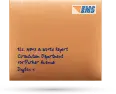
Your order is carefully packed and ships within 24 hours. Here is what a typical package looks like.
Sized like a regular personal letter (9.4x4.3x0.3 inches), with no indication of what is inside.


| Shipping Method | Estimated delivery |
|---|---|
| Express Free for orders over $300.00 | Estimated delivery to the U.S.: 4-7 days |
| Standard Free for orders over $200.00 | Estimated delivery to the U.S.: 14-21 days |









Discount Coupons
- Independence Day - July 4, 2026 10% JULY410
- Labor Day - September 7, 2026 7% LABOR07
- Thanksgiving - November 26, 2026 9% THANKS09
Brand Names
| Country | Brand Names |
|---|---|
 Argentina Argentina | Mupax Mupirocina Lafedar Mupirox Paldar Vidox |
 Australia Australia | APO-Mupirocin Medicianz Mupirocin Supirocin |
 Bangladesh Bangladesh | Bactoderm Bactrocin Dermoban Muroderm Muron Systop Trego |
 Bosnia and Herzegovina Bosnia and Herzegovina | Betrion Mirobact Mupiron Mupobel |
 Brazil Brazil | Bacrocin Bactocin Bactroneo Mupirocina Cristalia Mupirocina Eurofarma Supirocin |
 Bulgaria Bulgaria | MupiroNasal |
 Canada Canada | Taro-Mupirocin |
 Chile Chile | Bantix Paldar Ultrabiotic Underan |
 Colombia Colombia | Mupiral |
 Croatia Croatia | Betrion Mirobact Mupiron |
 Cyprus Cyprus | Mupiderm |
 Ecuador Ecuador | Bagobiotic Mupax Mupiral Paldar Presiderm |
 Egypt Egypt | Bactrocin Bactroform Mupirax Probactcin |
 France France | Mupiderm Mupirocine Biogaran |
 Georgia Georgia | Enfecderm Mupisin |
 Germany Germany | InfectoPyoderm Turixin |
 Greece Greece | Bactrocine Hevronaz Micoban Mupider Mupiran Veltion |
 Hong Kong Hong Kong | Muprin |
 India India | B-Bact Mupibact Mupinova Mupirax Mupirol Pirocin Supirocin T-Bact |
 Indonesia Indonesia | Bactoderm Mertus Mupirocin Pharos Muprin Pibaksin |
 Israel Israel | Bactoderm Mupirocin Teva |
 Italy Italy | Mupiskin |
 Malaysia Malaysia | Muprin Supirocin |
 Mexico Mexico | Dermucor-H Dermucor S Sinpebac |
 Netherlands Netherlands | Mupirocine PCH |
 Nicaragua Nicaragua | Mupirocina |
 North Macedonia North Macedonia | Mirobact Mupiron |
 Oman Oman | Supirocin |
 Paraguay Paraguay | Bantix Underan |
 Peru Peru | Bagobiotic Mupibiot Mupirocina Mupirodal Mupirotrim Mupirox Spectroderm Underan |
 Philippines Philippines | Bactifree Bactreat Bactrocin Foskina Mupiban Mupicin Muprin |
 Poland Poland | Mupirox Taconal |
 Singapore Singapore | Muprin Supirocin |
 South Africa South Africa | Supiroban |
 Spain Spain | Mupirocina Dermogen Plasimine |
 Taiwan Taiwan | Bactermin Dermasafe |
 Thailand Thailand | Bacidal Bactafect Bactex Bactokil Banbact Muporin |
 Turkey Turkey | Bacoderm Balaban Mupiderm Mupigen Mupobel |
 United Kingdom United Kingdom | Mupirocin |
 United States United States | Centany Mupirocin |
 Uruguay Uruguay | Mupax Mupirin Vidox |
 Venezuela Venezuela | Bactrobandos |
 Vietnam Vietnam | Supirocin |
| Manufacturer | Brand Names |
|---|---|
| Cipla Limited | Mupinase |
Description
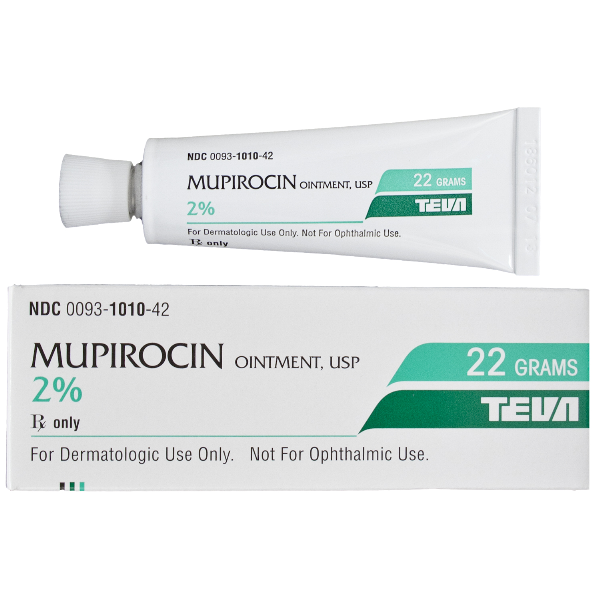
Mupirocin is a topical antibiotic used to treat certain bacterial skin infections and to help clear nasal carriage of Staphylococcus aureus in specific cases. It works locally on the skin and is generally absorbed only in very small amounts, which helps limit systemic effects. To reduce the risk of resistance, it should be used exactly as prescribed and for the recommended duration.
Adverse Effects and Precautions
Mupirocin is usually well tolerated, but local reactions such as burning, stinging, and itching may occur after application to the skin. Some mupirocin products are formulated in a macrogol base; such formulations are not suitable for application to mucous membranes and should be used with caution in patients with extensive burns or wounds because of the possibility of macrogol toxicity. Care is also required in patients with renal impairment.
Antimicrobial Action
Mupirocin is an antibacterial that inhibits bacterial protein synthesis by binding to isoleucyl transfer RNA synthetase. It is mainly bacteriostatic at low concentrations, although it is usually bactericidal at the high concentrations achieved by topical application to the skin. At these concentrations, it may have some activity against organisms reported to be relatively resistant to mupirocin in vitro. It is mainly active against Gram-positive aerobes.
Most strains of staphylococci (including methicillin-resistant and multiply resistant Staph. aureus) and streptococci are susceptible in vitro, although the enterococci are relatively resistant. Mupirocin is also active against Listeria monocytogenes and Erysipelothrix rhusiopathiae. The Gram-negative organisms are generally insensitive, but Haemophilus influenzae, Neisseria spp., and a few others are sensitive.
Anaerobic organisms, both Gram-positive and Gram-negative, are generally resistant, and activity against fungi is low. Mupirocin is more active in vitro at acidic pH than under alkaline conditions. Naturally resistant strains of Staph. aureus occur rarely, but resistance, including high-level plasmid-mediated transferable resistance, has emerged, particularly during long-term use. There has been some concern that inappropriate prescribing of mupirocin has led to steadily increasing resistance.
Activity against fungi
Activity of mupirocin 2% in vitro against Candida albicans was comparable to that of other commonly used topical antifungals. Although MICs were considerably in excess of those reported for susceptible bacteria, clinical responses in 10 patients suggested that adequate concentrations of mupirocin were achieved after topical application.
Pharmacokinetics
Only very small amounts of topically applied mupirocin are absorbed into the systemic circulation, where it is rapidly metabolized to monic acid, which is excreted in the urine.
Uses and Administration
Mupirocin is an antibacterial produced by Pseudomonas fluorescens. It is applied topically as a 2% ointment in a macrogol base, or as a cream containing mupirocin calcium equivalent to 2% mupirocin, in the treatment of various bacterial skin infections. These preparations should be applied up to 3 times daily for up to 10 days; treatment should be re-evaluated if there is no response after 3 to 5 days.
These preparations are not suitable for application to mucous membranes; therefore, a nasal ointment containing mupirocin calcium equivalent to 2% mupirocin in a paraffin base is used for eradication of the nasal carriage of Staphylococcus aureus, particularly epidemic methicillin-resistant strains.
The nasal ointment should be applied into each nostril 2 or 3 times daily for a maximum of 7 days.