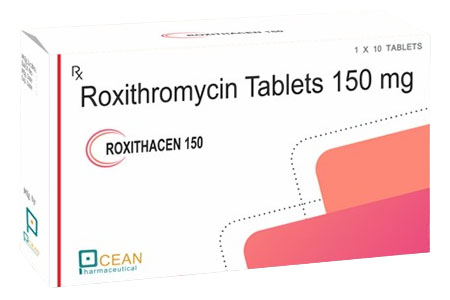
Roxithromycin is a macrolide antibiotic used in some countries to treat susceptible bacterial infections (most commonly respiratory tract and some skin/soft tissue infections). It is an oral, prescription-only medicine.
US note: Roxithromycin is not FDA-approved in the United States. Any use in the US should be guided by a licensed clinician.
What it is used for
Roxithromycin may be prescribed for bacterial infections caused by susceptible organisms, including certain upper and lower respiratory tract infections and some skin/soft tissue infections. It is not effective for viral illnesses (e.g., colds or flu).
How to take
In markets where it is approved, roxithromycin is typically taken by mouth once or twice daily, often at least 15 minutes before meals (food can reduce absorption). Follow your prescriber's directions and complete the full course unless told otherwise.
Roxithromycin vs other antibiotics
| Comparison |
Roxithromycin |
Amoxicillin |
Azithromycin |
Erythromycin |
| Drug class |
Macrolide |
Penicillin (beta-lactam) |
Macrolide (azalide) |
Macrolide |
| Typical role |
Alternative option in some countries for susceptible respiratory/skin infections |
Common first-line option for many ENT/respiratory infections (when appropriate) |
Often used for certain respiratory infections and some atypical pathogens (when appropriate) |
Older macrolide; still used but often limited by GI side effects and interactions |
| Penicillin allergy |
May be an alternative in some penicillin-allergic patients (clinician decision) |
Not suitable in true immediate-type penicillin allergy |
May be an alternative in some penicillin-allergic patients (clinician decision) |
May be an alternative in some penicillin-allergic patients (clinician decision) |
| Food effect |
Absorption can be reduced with food; often taken before meals |
Usually can be taken with or without food (depends on product) |
Depends on formulation; many can be taken with or without food |
Depends on salt/formulation; some have food effects |
| Common side effects |
GI upset (nausea, abdominal pain, diarrhea), headache, rash |
GI upset, rash; diarrhea can occur |
GI upset; diarrhea; often less nausea than erythromycin |
GI upset is common; nausea/abdominal cramps are frequent |
| QT/arrhythmia risk |
Macrolide class warning: QT prolongation can occur in rare cases |
Not a typical QT-prolonging antibiotic |
Macrolide class warning: QT prolongation can occur in rare cases |
Macrolide class warning: QT prolongation can occur in rare cases |
| Drug interaction potential |
Can interact with some medicines (see below); caution with anticoagulants |
Fewer CYP-related interactions than macrolides |
Generally fewer CYP3A interactions than erythromycin/clarithromycin |
Higher interaction burden (CYP-related) than many alternatives |
When doctors usually choose which
| Scenario (simplified) |
Often considered |
Notes |
| Typical bacterial ENT/respiratory infection where a beta-lactam is appropriate |
Amoxicillin |
Common first-line choice in many guidelines/markets; depends on diagnosis and local resistance patterns. |
| Suspected "atypical" respiratory pathogens, or need for a macrolide-type option |
Azithromycin |
Often preferred within the macrolide class due to convenient dosing and generally fewer CYP3A interactions than erythromycin. |
| Need for a macrolide alternative where available locally |
Roxithromycin |
Used in some countries; take local product info into account. In the US it is not FDA-approved. |
| Macrolide needed but newer alternatives are not suitable/available |
Erythromycin |
Effective in some settings, but GI side effects and interaction burden can limit use. |
| When to be extra cautious with macrolides |
Roxithromycin / Azithromycin / Erythromycin |
Use caution with known QT prolongation, electrolyte abnormalities, or other QT-prolonging medicines. |
How it works
Roxithromycin is a macrolide antibiotic. It binds to the 50S ribosomal subunit and inhibits bacterial protein synthesis.
Side effects
Common side effects include nausea, abdominal pain, diarrhea, headache, and skin rash.
Stop the medicine and seek urgent medical care if you develop signs of a serious allergic reaction (e.g., swelling of the face/lips/tongue, difficulty breathing), severe skin reactions (blistering/peeling rash), severe or persistent diarrhea, or symptoms of liver injury (dark urine, yellowing of skin/eyes, severe fatigue).
Warnings and precautions
- Heart rhythm: rare cases of QT prolongation and serious arrhythmias have been reported with macrolides. Use extra caution if you have known QT prolongation, low potassium/magnesium, slow heart rate, or if you take other QT-prolonging medicines.
- Antibiotic-associated diarrhea: severe diarrhea (including C. difficile colitis) can occur during or after antibiotic therapy.
- Liver: liver injury has been reported rarely. Use caution in severe hepatic impairment and follow clinician advice.
- Kidney: rare cases of interstitial nephritis have been reported.
Drug-drug interactions
Tell your clinician/pharmacist about all medicines and supplements you take. Important interactions may include:
- Warfarin and other vitamin K antagonists: increased INR and bleeding have been reported; INR monitoring is recommended during combined use.
- Statins and fibrates: rare cases of muscle toxicity have been reported with interacting combinations; report muscle pain or weakness promptly.
- Theophylline: exposure may increase slightly; monitoring may be needed in some patients.
- QT-prolonging medicines: combined use can increase arrhythmia risk.
Special populations
- Pregnancy and breastfeeding: use only if prescribed. Small amounts may pass into breast milk; discuss risks/benefits with a clinician.
- Hepatic impairment: dose reduction may be recommended in severe hepatic impairment (clinician-directed).
- Renal impairment: for short courses, dose adjustment is often not required; severe impairment should be clinician-managed.
- Children: pediatric dosing is weight-based and should follow local product information and clinician guidance.
Pharmacokinetics
Roxithromycin has an absolute bioavailability of approximately 50%. Peak concentrations typically occur about 1-2 hours after dosing. Food can reduce absorption. It is highly protein-bound and distributes into tissues; small amounts may be found in breast milk. Elimination occurs via multiple routes (including fecal and urinary), with a reported half-life around 12 hours in healthy adults; the half-life may be prolonged in hepatic or renal impairment.
Off-label / investigational mentions
Some studies have explored macrolides (including roxithromycin) for conditions such as gingival overgrowth or cardiovascular prevention. These are not standard labeled indications.
Storage
Store below 25°C (77°F) in a cool, dry place. Protect from light and moisture. Keep out of reach of children.