
Primaquine

Dosages
Primaquine 7.5 mg
| Quantity | Price per tablet | Total price | |
|---|---|---|---|
| 30 | $1.87 | $56.00 | |
| 60 | $1.67 | $100.00 | |
| 120 | $1.56 | $187.00 | |
| 270 | $1.34 | $362.00 | |
| 360 | $1.25 | $449.00 |
Primaquine 15 mg
| Quantity | Price per tablet | Total price | |
|---|---|---|---|
| 30 | $2.20 | $66.00 | |
| 60 | $1.67 | $100.00 | |
| 90 | $1.49 | $134.00 | |
| 120 | $1.30 | $156.00 | |
| 180 | $1.21 | $218.00 |
Payment & Shipping
Your order is carefully packed and ships within 24 hours. Here is what a typical package looks like.
Sized like a regular personal letter (9.4x4.3x0.3 inches), with no indication of what is inside.



| Shipping Method | Estimated delivery |
|---|---|
| Express Free for orders over $300.00 | Estimated delivery to the U.S.: 4-7 days |
| Standard Free for orders over $200.00 | Estimated delivery to the U.S.: 14-21 days |









Discount Coupons
- Independence Day - July 4, 2026 10% JULY410
- Labor Day - September 7, 2026 7% LABOR07
- Thanksgiving - November 26, 2026 9% THANKS09
Brand Names
| Country | Brand Names |
|---|---|
 Australia Australia | Primacin |
 Bangladesh Bangladesh | Jasoprim Kanaprim Remaquin |
 Colombia Colombia | Neo-Quipenyl Primaquina |
 India India | Malirid |
 Nepal Nepal | Jasoprim 15 |
| Manufacturer | Brand Names |
|---|---|
| Hab Pharma | PMQ |
| Inga | PMQ |
Description
Malaria is a serious and occasionally fatal medical condition caused by parasites. Most commonly, it is caused by mosquito-borne parasites that enter a person's bloodstream through bites. Today, it is not considered an incurable disease; however, prompt diagnosis and treatment are essential to prevent complications. One of the medications prescribed to treat malaria is primaquine. It is widely prescribed in areas where malaria is prevalent, including Africa and Asia, Central and South America, Haiti, and the Dominican Republic, among others.
Learn more about the drug primaquine, its dosage, risks, and side effects.
What is Primaquine?
Primaquine is a prescription medication recommended to treat malaria caused by mosquito bites. It is a first-line treatment in countries where malaria risk is high. Doctors prescribe it alongside other medications such as chloroquine to achieve the highest therapeutic effect.
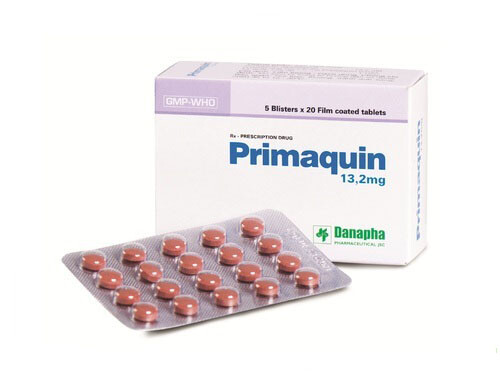
Today, it belongs to the class of drugs called antimalarials (antiprotozoals). The World Health Organization (WHO) has also listed it among Essential Medicines.
Primaquine's Mechanism of Action
Primaquine's current mechanism of action is not clearly understood; however, it is believed to work by binding to and affecting protozoal deoxyribonucleic acid (DNA), as well as producing reactive oxygen species and interfering with the parasite's electron transport. Medical professionals note that the medication is lethal to Plasmodium vivax and Plasmodium ovale (parasites that cause malaria in humans) once they reach the liver and blood cells.
Malaria parasites, upon entering the human body, break down red blood cells, in particular hemoglobin. They damage it and divide hemoglobin into two independent parts: heme and globin. Parasites cannot tolerate heme since it is toxic to them; thus, they produce certain chemicals that make heme a more favorable environment. When a person takes primaquine, it affects the parasites' viability, especially by interfering with their mitochondria, which are responsible for energy production. Once the medication affects this process, the parasites die since they cannot survive without energy. In short, the medication helps stop the infection and supports recovery.
It is never used as the only agent to treat malaria, but rather alongside other first-line medications. Beyond that, primaquine's known mechanism is not suitable for the prevention of the disease.
What Is It Used for?
Today, the drug is approved by the Food and Drug Administration to treat malaria.
Generally, primaquine uses may be classified as follows:
- to treat malaria, and prevent its onset or deterioration once a person is already infected;
- to treat Pneumocystis jiroveci pneumonia, which is a lung disease caused by a fungus (it is widespread in patients with acquired immunodeficiency syndrome (AIDS) and those prescribed immunosuppressive medications).
A doctor may occasionally advise other common uses of primaquine when first-line medications are unable to treat one or another medical condition. Discuss its use only with your healthcare provider.
Primaquine Dosage and Duration
| Weight (kg) | Number of Primaquine tablets | Primaquine dose (mg) | Primaquine dose (mg/kg) |
| 10-17 | 0.5 | 7.5 | 0.44-0.75 |
| 18-25 | 1 | 15 | 0.6-0.83 |
| 26-35 | 1.5 | 22.5 | 0.64-0.87 |
| 36-45 | 2 | 30 | 0.67-0.83 |
| 46-55 | 2.5 | 37.5 | 0.69-0.82 |
| 56-75 | 3 | 45 | 0.64-0.82 |
| ≥76 | 4 | 60 | ≤0.78 |
Primaquine dosing is tailored individually. Take it by mouth once per day with food to support digestion and help prevent an upset stomach, or as directed by your healthcare provider.
Primaquine is usually prescribed for 2 weeks after a person leaves an area with a high risk of malaria transmission. It is not suitable for long-term use; therefore, treatment should not exceed 14 days. Do not stop following primaquine's dosing regimen without a doctor's approval, even if you feel better or do not experience a positive effect. A doctor will adjust the dose as needed for a safe transition and to reduce the risk of side effects.
For Children
The recommended pediatric dose to treat malaria is 0.5 mg/kg once per day over 2 weeks. The dosage should not exceed 30 mg.
The recommended pediatric dose to treat Pneumocystis pneumonia is 0.3 mg/kg once per day. The dosage should not exceed 30 mg.
For Adults
The adult dose for treating malaria is 15 mg once per day over 2 weeks. The dose is recommended as a radical cure or for the prevention of malaria relapse. It should be given alongside chloroquine.
The adult dose for treating Pneumocystis pneumonia is 30 mg once per day over 21 days. It should be taken alongside clindamycin or other recommended first-line medications.
Please note, some patients may require another dosing regimen based on their current health conditions.
During Pregnancy
It is unknown whether the drug may be used safely in pregnant women; therefore, it is contraindicated. Based on animal studies, the medication has been linked to gene mutations, teratogenicity, and fetal harm.
Inform your doctor if you are pregnant or plan to become pregnant while taking the medication. Your doctor may advise you to avoid pregnancy since the fetus may be harmed or born with gene mutations.
There is no need to follow a specific diet while taking the medication unless a doctor recommends otherwise. Do not increase or reduce the dose without speaking to your doctor since it may become ineffective or cause severe side effects or deterioration of your current health condition.
Symptoms of Overdose
Like any other medication, it may cause severe side effects, including overdose events when taken not as directed by a doctor.
Overdose symptoms are the following:
- abdominal cramps;
- cardiac arrhythmia and QT interval prolongation;
- vomiting and nausea;
- burning;
- epigastric distress;
- central nervous system and cardiovascular disturbances;
- cyanosis, methemoglobinemia, moderate leukocytosis or leukopenia, and anemia.
Note: this is not a full list of all overdose symptoms since they vary among patients.
If you believe you have overdosed, seek emergency help immediately and call 911. If you just feel unwell and your condition does not get worse, sit or lie down. If symptoms worsen and you cannot tolerate the pain, seek emergency help.
How Does It Interact With Other Drugs
The drug may interact with a number of other drugs and substances. First, this concerns patients who are currently prescribed medications to treat other health conditions. Second, it may involve herbal products or supplements as well, since they may alter the efficacy of the drug. Pay attention to the following medications, which are typically not recommended for use together.
Aurothioglucose
It is not recommended to use the drug alongside aurothioglucose. It is a gold salt typically prescribed for therapeutic purposes when treating arthritis through intramuscular injection. It may be used for rheumatoid arthritis when first-line treatments are not effective enough or cause severe side effects.
If you currently take aurothioglucose, a doctor may make changes to your medication protocol either by stopping your current gold salt or making changes to the dosages of both.
Levomethadyl
Levomethadyl is an opioid analgesic prescribed to manage opioid dependence. It is a controlled substance that requires close supervision and caution. Do not take it alongside primaquine, or side effects may occur.
Carbamazepine
This anticonvulsant medication is typically prescribed to treat epilepsy and neuropathic pain. Beyond that, it may be used to treat schizophrenia and bipolar disorder when first-line therapies are not effective or cause severe side effects. Using primaquine with carbamazepine should be avoided at all times.
Primaquine Side Effects
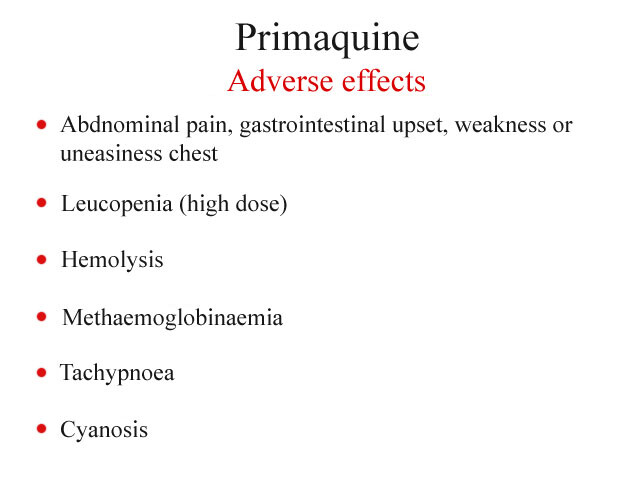 Primaquine common side effects range from mild to severe when the drug is not taken as directed. Do not change the dose to maximize the therapeutic effect, or if you do not experience any effect, without speaking to your healthcare provider.
Gastrointestinal
The medication may cause gastrointestinal effects, including acute intravascular hemolysis,
methemoglobinemia, as well as immunosuppression through inhibition of lymphocyte proliferation. Beyond that, it is linked to an upset stomach, vomiting, and nausea. The latter symptoms are usually temporary and may be addressed with designated medications, but only after receiving a doctor's approval.
Hematologic
Its use may be linked to a sudden loss of red blood cells. This, in turn, may result in deterioration of health, manifested by tiredness, changes in urine color, heartbeat alterations, methemoglobinemia, and headache, among others.
Cardiac
One may experience a fast, slow, or irregular heartbeat and other heart-related problems. A patient should inform a doctor about a family history of heart disease or heart problems.
Nervous System
There is not much data confirming the effect of the drug on one's nervous system, though one may experience tiredness or irritability. If you experience any changes in your nervous system or mental health, discuss them with your healthcare provider.
Skin and Soft Tissue
The medication may cause severe allergy, though this is rare. Skin-related side effects may be manifested by rash, itching, swelling, and trouble breathing, among others.
Note: some side effects are temporary and may resolve as your body gets used to the medication. However, long-term effects may occur and should be addressed immediately with a doctor.
Warnings
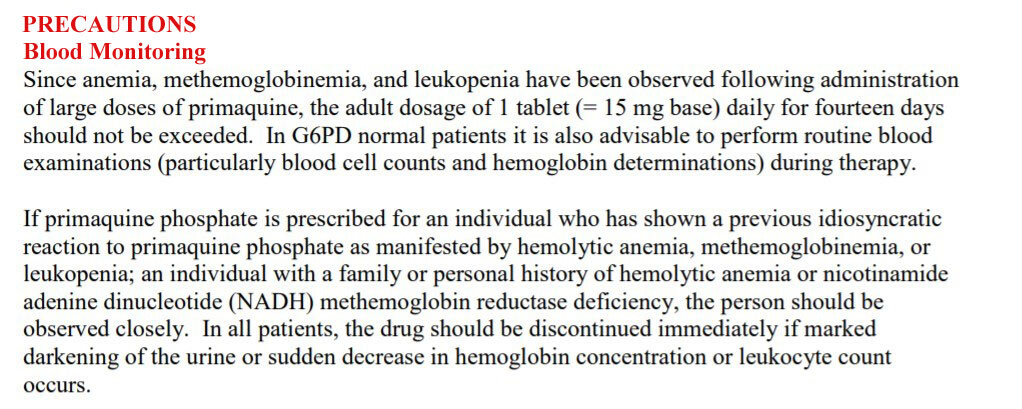
Prior to starting treatment with the medication, speak to your healthcare provider to receive a tailored dose and instructions. Some important warnings include the following.
Allergy
Allergic reactions to the medication and its components are possible but rare. One may develop itching, rash, trouble breathing, dizziness, among others. Provide a full medical history to your doctor, and make sure to discuss allergies to other medications and foods.
Alcohol Interaction
It is not recommended to take the drug with alcohol due to the potential for dizziness or extreme relaxation. If you have taken primaquine and alcohol, abstain from driving or operating heavy machinery since this may result in injuries or death. Both substances may greatly affect your alertness. Inform your doctor about marijuana use as well, since it should be avoided alongside the medication for your own safety.
For People With Certain Health Conditions
Certain medical and health conditions should prevent you from taking the drug. In particular, this includes immune system diseases, including rheumatoid arthritis and lupus. It also includes blood diseases or abnormalities such as anemia, low white blood cell counts, hemolytic anemia, and methemoglobinemia.
The drug may also affect heart rhythm; therefore, inform your doctor about your current heart health. Also, disclose the medical history of all medical conditions in your family.
Pregnant Women
The drug should not be used in pregnant and nursing mothers. It may affect the fetus. It is highly recommended to prevent pregnancy during and after treatment with the drug by using reliable birth control.
Since it is unknown whether the drug passes into breast milk, nursing mothers should not take it either.
Please also abstain from grapefruit-based products, and juice in particular, since they may affect the efficacy of the drug or cause side effects.
This is not a full list of all warnings and precautions. Discuss all medical nuances with your healthcare provider for your own safety. Please also refer to the Food and Drug Administration (FDA) label of the drug to learn more.
Pros and Cons of Primaquine
Like other medications, primaquine has its own benefits and drawbacks that are usually discussed by one's healthcare provider.
|
Pros |
Cons |
|
It is approved by the Food and Drug Administration to treat malaria; |
It cannot be classified as a very affordable medication; |
|
It can be prescribed to pediatric patients under close supervision; |
It is not suitable for pregnant and nursing mothers; |
|
It does not require long-term use; |
It has many limitations concerning interactions with other medications; |
|
Allergic side effects are rare; |
It should be used only alongside other first-line medications. A typical combination is Chloroquine drug vs. Primaquine. |
|
It is highly effective in preventing malaria relapse; |
|
|
It may be prescribed to treat Pneumocystis pneumonia; |
|
If you want to learn more information about the dosing regimen, particularly for your case, speak to your doctor. In case of any side effects, or changes in your normal health state, speak to your doctor to prevent deterioration. Do not diagnose or treat yourself with the drug based on online instructions, guidelines, and feedback from other patients who have had malaria or Pneumocystis pneumonia. This may be dangerous and result in overdose or even fatal events.