
Nevirapine

Dosages
Nevirapine 200 mg
| Quantity | Price per tablet | Total price | |
|---|---|---|---|
| 20 | $2.50 | $50.00 | |
| 30 | $1.90 | $57.00 | |
| 60 | $1.67 | $100.00 | |
| 90 | $1.42 | $128.00 | |
| 120 | $1.18 | $142.00 | |
| 180 | $1.11 | $199.00 | |
| 270 | $1.00 | $270.00 | |
| 360 | $0.90 | $324.00 |
Payment & Shipping
Your order is carefully packed and ships within 24 hours. Here is what a typical package looks like.
Sized like a regular personal letter (9.4x4.3x0.3 inches), with no indication of what is inside.



| Shipping Method | Estimated delivery |
|---|---|
| Express Free for orders over $300.00 | Estimated delivery to the U.S.: 4-7 days |
| Standard Free for orders over $200.00 | Estimated delivery to the U.S.: 14-21 days |









Discount Coupons
- Independence Day - July 4, 2026 10% JULY410
- Labor Day - September 7, 2026 7% LABOR07
- Thanksgiving - November 26, 2026 9% THANKS09
Brand Names
| Country | Brand Names |
|---|---|
 Australia Australia | Viramune Viramune XR |
 Canada Canada | Viramune Viramune XR |
 France France | Viramune |
 Germany Germany | Viramune |
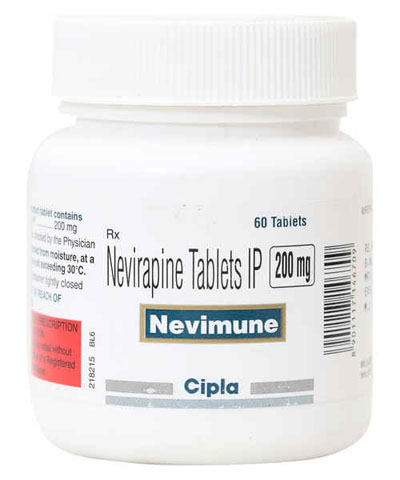
 India India | Nevimune |
 Italy Italy | Viramune |
 Netherlands Netherlands | Viramune |
 Philippines Philippines | Viramune XR |
 Poland Poland | Viramune |
 Spain Spain | Viramune |
 Thailand Thailand | Neravir Viramune |
 United Kingdom United Kingdom | Viramune |
 United States United States | Viramune Viramune XR |
| Manufacturer | Brand Names |
|---|---|
| Cipla Ltd | Nevimune |
Description
What Nevirapine is and what it is used for
This medicine belongs to a group of medicines called antiretrovirals, used in the treatment of Human Immunodeficiency Virus (HIV-1) infection.
The active ingredient of this drug is nevirapine. The active ingredient is the substance that reduces the amount of virus in the blood, helping improve your condition. It belongs to a class of anti-HIV medicines called non-nucleoside reverse transcriptase inhibitors (NNRTIs). Reverse transcriptase is an enzyme that HIV needs in order to multiply. This medicine blocks reverse transcriptase. By stopping reverse transcriptase from working, the drug helps control HIV-1 infection.
You must take this medicine together with other antiretroviral medicines. Your doctor will recommend the best medicines for you.
Before you take this medicine
Do not take this medicine
- if you are allergic (hypersensitive) to nevirapine or any of the other ingredients of this medicine. See Section 6 of this leaflet for a list of other ingredients
- if you have taken this medicine before and had to stop treatment because you suffered from:
- severe skin rash
- skin rash with other symptoms for example:
- fever
- blistering
- mouth sores
- inflammation of the eye
- swelling of the face
- general swelling
- shortness of breath
- muscle or joint pain
- general feelings of illness
- abdominal pain
- hypersensitivity (allergic) reactions
- inflammation of the liver (hepatitis)
- if you have severe liver disease
- if you have had to stop treatment in the past because of changes in your liver function
- if you are taking a medicine containing the herbal substance St John's Wort (Hypericum perforatum). This herbal substance may stop this medicine from working properly.
Take special care: During the first 18 weeks of treatment it is very important that you and your doctor watch out for signs of liver or skin reactions. These can become severe and even life threatening. You are at greatest risk of such a reaction during the first 6 weeks of treatment.
If you experience severe rash or hypersensitivity (allergic reactions that may appear in the form of rash) accompanied by other side effects such as
- fever,
- blistering,
- mouth sores,
- inflammation of the eye,
- swelling of the face,
- general swelling,
- shortness of breath,
- muscle or joint pain,
- general feelings of illness,
- or abdominal pain
You should discontinue taking this medicine and you must contact your doctor immediately as such reactions can be potentially life-threatening or lead to death. If you ever have only mild rash symptoms without any other reaction please inform your doctor immediately, who will advise you whether you should stop taking the drug.
If you experience symptoms suggesting damage of the liver, such as
- loss of appetite,
- feeling sick (nausea),
- vomiting,
- yellow skin (jaundice),
- abdominal pain
you should discontinue taking the medicine and must contact your doctor immediately.
If you develop severe liver, skin or hypersensitivity reactions whilst taking this drug, never take it again without referring to your doctor. You must take the dosage as prescribed by your doctor. This is especially important within the first 14 days of treatment.
The following patients are at increased risk of developing liver problems:
- women
- infected with hepatitis B or C
- abnormal liver function tests
- treatment-naive patients with higher CD4 cell counts at the start of therapy (women more than 250 cells/mm3, men more than 400 cells/mm3)
- pre-treated patients with detectable HIV-1 plasma viral load and higher CD4 cell counts at the start of therapy (women more than 250 cells/mm3, men more than 400 cells/mm3)
In some patients with advanced HIV infection (AIDS) and a history of opportunistic infection (AIDS defining illness), signs and symptoms of inflammation from previous infections may occur soon after anti-HIV treatment is started. It is believed that these symptoms are due to an improvement in the body's immune response, enabling the body to fight infections that may have been present with no obvious symptoms. If you notice any symptoms of infection, please inform your doctor immediately.
Changes of body fat may occur in patients receiving combination antiretroviral therapy. Contact your doctor if you notice changes in body fat.
Some patients taking combination antiretroviral therapy may develop a bone disease called osteonecrosis (death of bone tissue caused by loss of blood supply to the bone). The length of combination antiretroviral therapy, corticosteroid use, alcohol consumption, severe weakness of the immune system and higher body mass index may be some of the many risk factors for developing this disease. Signs of osteonecrosis are joint stiffness, aches and pains (especially of the hip, knee and shoulder) and difficulty in movement. If you notice any of these symptoms please inform your doctor.
This medicine is not a cure for HIV infection. Therefore, you may continue to develop infections and other illnesses associated with HIV infection. You should therefore remain in regular contact with your doctor. In addition, this drug does not prevent the risk of passing on HIV to others through blood or sexual contact. Use appropriate precautions to prevent passing on HIV to other people. Please refer to your doctor.
Use in children
Tablets can be taken by:
- children 16 years of age or older
- children under 16 years of age who: weigh 50 kg or more
- or have a body surface area above 1.25 square metres.
For smaller children an oral suspension liquid form is available.
Taking other medicines
Please tell your doctor or pharmacist if you are taking or have recently taken any other medicines, including medicines obtained without a prescription. Inform your doctor about all other medicines you are taking before you start treatment. Your doctor might need to monitor whether your other medicines are still working and adjust doses. Carefully read the package leaflet of all other HIV medicinal products you are taking in combination with this medicine.
It is particularly important that you tell your doctor if you are taking or have recently taken:
- St John's Wort (Hypericum perforatum, medicine to treat depression)
- rifampicin (medicine to treat tuberculosis)
- rifabutin (medicine to treat tuberculosis)
- macrolides e.g. clarithromycin (medicine to treat bacterial infections)
- fluconazole (medicine to treat fungal infections)
- ketoconazole (medicine to treat fungal infections)
- itraconazole (medicine to treat fungal infections)
- methadone (medicine used for treatment of opiate addicts)
- warfarin (medicine to reduce blood clotting)
- hormonal contraceptives (e.g. the "pill")
- atazanavir (another medicine to treat HIV infection)
- lopinavir/ritonavir (another medicine to treat HIV infection)
- fosamprenavir (another medicine to treat HIV infection)
- efavirenz (another medicine to treat HIV infection)
Your doctor will carefully monitor the effect of this medicine and any of these medicines if you are taking them together.
If you are undergoing kidney dialysis, your doctor may consider a dose adjustment. This is because the active ingredient can be partly washed out of your blood by dialysis.
Taking this medicine with food and drink
There are no restrictions on taking this medicine with food and drink.
Pregnancy and breast-feeding
Ask your doctor or pharmacist for advice before taking any medicine.
You should stop breast-feeding if you are taking this medicine. It is in general recommended that you do not breast-feed if you have HIV infection because it is possible that your baby can become infected with HIV through your breast milk.
Driving and using machines
There are no specific studies on the ability to drive vehicles and use machinery. If you feel that your ability to drive or use machines may be affected you should not drive or use machines.
Important information about some of the ingredients
Tablets contain lactose (milk sugar). If you have been told by your doctor that you have an intolerance to some sugars, contact your doctor before taking this medicine.
How to take this medicine
You should not use this medicine on its own. You must take it with at least two other antiretroviral medicines. Your doctor will recommend the best medicines for you.
Always take this medicine exactly as your doctor has told you. You should check with your doctor or pharmacist if you are not sure.
Only take tablets by mouth. Do not chew your tablets. You may take this medicine with or without food.
Dosage
The dose is one 200 mg tablet per day for the first 14 days of treatment ("lead-in" period). After 14 days, the usual dose is one 200 mg tablet twice a day.
It is very important that you take only one tablet a day for the first 14 days ("lead-in" period). If you have any rash during this period, do not increase the dose but consult your doctor.
The 14-day "lead-in" period has been shown to lower the risk of skin rash.
As this medicine must always be taken together with other HIV antiretroviral medicines, you should follow the instructions for your other medicines carefully. These are supplied in the package leaflets for those medicines.
This medicine is also available in liquid form as an oral suspension. This is particularly suitable if:
- you have problems swallowing tablets
- or you are a child weighing less than 50 kg
- or you are a child having a body surface area less than 1.25 square metres (your doctor will work out your surface area).
You should continue treatment for as long as instructed by your doctor.
Your doctor will monitor you with liver tests or for undesirable effects such as rash. Depending on the outcome your doctor may decide to interrupt or stop treatment. Your doctor might then decide to restart you on a lower dose.
If you take more than you should
Do not take more than prescribed by your doctor and described in this leaflet. There is at present little information on the effects of overdose. Consult your doctor if you have taken more than you should.
If you forget to take a dose
Try not to miss a dose. If you notice that you have missed a dose within 8 hours, take the next dose as soon as possible. If you notice it more than 8 hours later, take the next dose at the usual time.
If you stop taking this medicine
Taking all doses at the appropriate times:
- greatly increases the effectiveness of your combination antiretroviral medicines
- reduces the chances of your HIV infection becoming resistant to your antiretroviral medicines.
It is important that you continue taking the drug correctly, as described above, unless your doctor instructs you to stop.
If you stop treatment for more than 7 days your doctor will instruct you to start the 14 day 'lead-in' period (described above) once again, before returning to the twice daily dose.
If you have any further questions on the use of this product, ask your doctor or pharmacist.
Possible side effects
Like all medicines, this drug can cause side effects, although not everybody gets them.
The most important side effects are severe and life threatening skin reactions and serious liver damage. These reactions occur mainly in the first 18 weeks of treatment. This is therefore an important period which requires close monitoring by your doctor.
If you ever observe any rash symptoms, inform your doctor immediately.
When rash occurs it is normally mild to moderate. However, in some patients a rash, which appears as a blistering skin reaction, can be severe or life-threatening (Stevens-Johnson syndrome and toxic epidermal necrolysis) and deaths have been recorded. Most of the cases of both severe rash and mild/moderate rash occur in the first six weeks of treatment.
If rash occurs and you also feel sick, you must stop treatment and visit your doctor immediately.
Hypersensitivity (allergic) reactions can occur. Such reactions may appear in the form of anaphylaxis (a severe form of allergic reaction) with symptoms such as:
- rash
- swelling of the face
- difficulty breathing (bronchial spasm)
- anaphylactic shock
Hypersensitivity reactions can also occur as rash with other side effects such as:
- fever
- blistering of your skin
- mouth sores
- inflammation of the eye
- swelling of the face
- general swelling
- shortness of breath
- muscle or joint pain
- a reduction in the numbers of your white blood cells (granulocytopenia)
- general feelings of illness
- severe problems with liver or kidneys (liver or kidney failure)
Tell your doctor immediately if you experience rash and any of the other side effects of a hypersensitivity (allergic) reaction. Such reactions can be life-threatening.
Abnormal liver functioning has been reported with the use of this medicine. This includes some cases of inflammation of the liver (hepatitis), which can be sudden and intense (fulminant hepatitis), and liver failure, which can be both fatal.
Tell your doctor if you experience any of the following clinical symptoms of liver damage:
- loss of appetite
- feeling sick (nausea)
- vomiting
- yellow skin (jaundice)
- abdominal pain
Evaluation of the side effects is based on the following frequencies:
| Very common: in at least 1 out of 10 patients treated |
| Common: in at least 1 out of 100 and less than 1 out of 10 patients treated |
| Uncommon: in at least 1 out of 1000 and less than 1 out of 100 patients treated |
| Rare: in at least 1 out of 10,000 and less than 1 out of 1000 patients treated |
The side effects described below have been experienced by patients given this medicine:
Very common:
- rash
Common:
- decreased numbers of white blood cells (granulocytopenia)
- allergic reactions (hypersensitivity)
- headache
- feeling sick (nausea)
- vomiting
- abdominal pain
- loose stools (diarrhoea)
- inflammation of the liver (hepatitis)
- muscle pain (myalgia)
- feeling tired (fatigue)
- fever
- abnormal liver function tests
Uncommon:
- drug rash with systemic symptoms (drug rash with eosinophilia and systemic symptoms)
- allergic reaction characterized by rash, swelling of the face, difficulty breathing (bronchial spasm) or anaphylactic shock
- decreased numbers of red blood cells (anaemia)
- yellow skin (jaundice)
- severe and life-threatening skin rashes (Stevens-Johnson syndrome/toxic epidermal necrolysis)
- hives (urticaria)
- fluid under the skin (angioedema)
- joint pain (arthralgia)
Rare:
- sudden and intense inflammation of the liver (fulminant hepatitis)
Combination antiretroviral therapy may cause changes in body shape due to changes in fat distribution. These may include loss of fat from legs, arms and face, increased fat in the abdomen (belly) and other internal organs, breast enlargement and fatty lumps on the back of the neck ('buffalo hump'). The cause and long-term health effects of these conditions are not known at this time. Combination antiretroviral therapy may also cause raised lactic acid and sugar in the blood, hyperlipaemia (increased fats in the blood) and resistance to insulin.
The following events have also been reported when this drug has been used in combination with other antiretroviral agents:
- decreased numbers of red blood cells or platelets
- inflammation of the pancreas
- decrease in or abnormal skin sensations. These events are commonly associated with other antiretroviral agents and may be expected to occur when this medicine is used in combination with other agents; however, it is unlikely that these events are due to treatment.
Use in children
A reduction in white blood cells (granulocytopenia) can occur, which is more common in children. A reduction in red blood cells (anaemia), which may be related to therapy, is also more commonly observed in children. As with rash symptoms, please inform your doctor of any side effects.
If any of the side effects gets serious, or if you notice any side effects not listed in this leaflet, please tell your doctor or pharmacist.
How to store this medicine
Keep out of the reach and sight of children.
Do not use after the expiry date which is stated on the carton and on the blister after "EXP". The expiry date refers to the last day of that month.
This medicinal product does not require any special storage conditions.
Medicines should not be disposed of via wastewater or household waste. Ask your pharmacist how to dispose of medicines no longer required. These measures will help to protect the environment.