I used povidone-iodine as a liquid before. What form do you sell for this product?
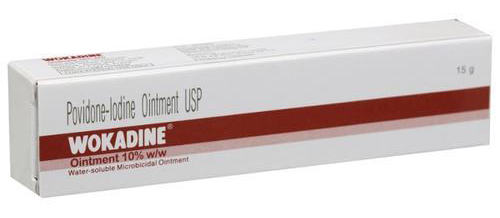
Our listing is for povidone-iodine 10% ointment in a tube for topical application. It is not a liquid solution, scrub, or spray.


 AntiInfectiveMeds
Since 2010
AntiInfectiveMeds
Since 2010

| Quantity | Price per tube | You save | Total price | |
|---|---|---|---|---|
| 1 | $45.30 | - | $45.30 | |
| 2 | $30.45 | $29.70 | $60.90 | |
| 3 | $25.50 | $59.40 | $76.50 |
Your order is carefully packed and ships within 24 hours. Here is what a typical package looks like.
Sized like a regular personal letter (9.4x4.3x0.3 inches), with no indication of what is inside.



| Shipping Method | Estimated delivery |
|---|---|
| Express Free for orders over $300.00 | Estimated delivery to the U.S.: 4-7 days |
| Standard Free for orders over $200.00 | Estimated delivery to the U.S.: 14-21 days |










Any minor cut or burn can turn into a real problem if it becomes infected. Betadine, which has povidone-iodine as its active ingredient, works as an antiseptic. Thus, it helps prevent infection or slow it down if it is already present in the wound.
Betadine affects many types of infectious agents, including viruses, bacteria, fungi, fungal spores, and even some protozoa. Because of this, the medicine may be used for the treatment and prophylaxis of:
If you compare Betadine yellow vs. green bottle packaging, there is no difference between the two, as both contain a 10% Betadine solution.
Methods of using the preparation differ depending on the location of the infection or wound and the dosage form you are going to use. Betadine is produced in the form of powder, vaginal suppositories, solution, and others.
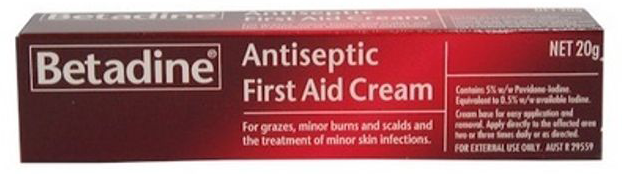
In the case of intravaginal use of Betadine, a yeast infection may improve after a week of daily administration. Insert one Betadine 200 mg suppository deep into the vagina once a day before sleep. If the infection doesn't go away during this time, therapy may be continued for another week.
The effectiveness of Betadine yellow for acne treatment is explained by the medicine's ability to kill bacteria, which can contribute to clogged pores. By cleansing the area affected by acne, you can help open the pores and speed up the healing process. As a result, your skin condition may improve significantly.
Betadine should be used as a spot treatment. Apply a thin layer of the remedy to the pimple. Make sure you've cleaned and dried the area before applying the medication.
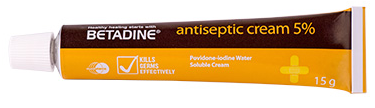
Unlike regular iodine, you may safely apply Betadine on open wounds. That's because it contains no alcohol, so it is less likely to irritate injured tissues.
Betadine may be used not only for treatment but also for prevention of infection. Hence, it may be useful to have it in your first aid kit.
Because iodine is a key component of the medication, some people should avoid using it. These include:
In addition, Betadine shouldn't be used in individuals who have undergone therapy with radioactive iodine (e.g., for thyroid carcinoma treatment). The medication may interact with some other drugs and supplements-for example, when used together with lithium-containing remedies. That's why you should inform your healthcare provider about all medicinal products you currently use.
When used intravaginally, Betadine may damage latex condoms. That's why it is better to use additional methods of preventing pregnancy during treatment and for 5 days after the end of treatment with Betadine vaginal suppositories.
Because of the antiseptic properties of the drug, it may act as a spermicide. Therefore, Betadine may affect a woman's ability to become pregnant. It's best not to use it if you are trying to get pregnant.
Betadine's active ingredients can cross the placenta. Although it is not known to cause congenital abnormalities, it may affect the functioning of the pituitary gland in an unborn baby or make a newborn hypersensitive to iodine.
Regular use during pregnancy may have the potential to be harmful to the baby. However, it may be used short term under medical supervision when clearly needed. One clinical trial conducted by Hungarian scientists reported no danger of Betadine use in pregnant women at 37-40 weeks of gestation, as the risk of developing hypothyroidism in mature fetuses is very low.
When Betadine is applied topically, it is more likely to cause side effects if used on large areas of skin for extended periods. However, in most patients, it doesn't cause any harmful effects.
Among the most frequent reactions to Betadine are:
In extremely rare cases, when people use the remedy in a way that violates the doctor's recommendations, serious iodine intoxication is possible. It may present as:
If you experience any of these signs, go to the nearest hospital promptly.

I used povidone-iodine as a liquid before. What form do you sell for this product?
Our listing is for povidone-iodine 10% ointment in a tube for topical application. It is not a liquid solution, scrub, or spray.
I receive my mail at a PO Box in Detroit. Can I use that address for this order?
Please enter your Detroit PO Box at checkout and use the address options shown there. PO Box eligibility can depend on the shipping option, so we cannot confirm it before checkout.
My 18-month-old has a small scraped knee from the playground. Can I put this ointment on it?
For children under 2 years old, povidone-iodine ointment should not be used unless directed by a doctor. Young children can absorb more iodine through the skin, which can affect thyroid function.
| Active ingredient | Povidone-iodine |
|---|---|
| Drug class | Topical antiseptic |
| Dosage form | Ointment |
| Available strengths | 10% |
| Route | Topical |
| Storage | Store at 68°F to 77°F, away from excessive heat, and keep the tube tightly closed. |
| ATC code | D08AG02 |
This product has 4 ratings, but only 3 written reviews so far. Share your experience and help other customers.
The 10% order for povidone-iodine matched what I selected.
My order arrived within the expected delivery window.
No issues with my Betadine order.


