
Allegra (Fexofenadine)

Dosages
Allegra 120 mg
| Quantity | Price per tablet | Total price | |
|---|---|---|---|
| 120 | $0.39 | $47.00 | |
| 180 | $0.36 | $65.00 | |
| 270 | $0.34 | $91.00 | |
| 360 | $0.33 | $118.00 |
Allegra 180 mg
| Quantity | Price per tablet | Total price | |
|---|---|---|---|
| 60 | $0.78 | $47.00 | |
| 90 | $0.59 | $53.00 | |
| 120 | $0.49 | $59.00 | |
| 180 | $0.39 | $70.00 | |
| 270 | $0.32 | $86.00 | |
| 360 | $0.29 | $104.00 |
Payment & Shipping
Your order is carefully packed and ships within 24 hours. Here is what a typical package looks like.
Sized like a regular personal letter (9.4x4.3x0.3 inches), with no indication of what is inside.



| Shipping Method | Estimated delivery |
|---|---|
| Express Free for orders over $300.00 | Estimated delivery to the U.S.: 4-7 days |
| Standard Free for orders over $200.00 | Estimated delivery to the U.S.: 14-21 days |









Discount Coupons
- Independence Day - July 4, 2026 10% JULY410
- Labor Day - September 7, 2026 7% LABOR07
- Thanksgiving - November 26, 2026 9% THANKS09
Brand Names
| Country | Brand Names |
|---|---|
 Argentina Argentina | Alercas Alerfedine Fexofen |
 Australia Australia | Fexotabs Telfast Xergic |
 Belgium Belgium | Telfast |
 Brazil Brazil | Allexofedrin Altiva |
 Czechia Czechia | Afexil Ewofex Telfast |
 Denmark Denmark | Nefoxef Telfast |
 Finland Finland | Alterfast Nefoxef Telfast |
 France France | Telfast |
 Germany Germany | Telfast |
 Hungary Hungary | Altiva Telfast |
 Italy Italy | Kalicet Telfast |
 Malaysia Malaysia | Fexofin Telfast |
 Mexico Mexico | Aldifex Gebenir |
 Netherlands Netherlands | Telfast |
 New Zealand New Zealand | Telfast Xergic |
 Norway Norway | Telfast |
 Poland Poland | Fexofast Telfast Telfexo |
 Portugal Portugal | Fexocare Telfast |
 Spain Spain | Telfast |
 Sweden Sweden | Telfast |
 Turkey Turkey | Fexadyne Fexofen Telfast |
| Manufacturer | Brand Names |
|---|---|
| Aventis Pharma Limited | Fexogra Galegra |
| Galpha Laboratories Limited | Fexogra Galegra |
| HAB Pharmaceuticals & Research Ltd. | Fexogra Galegra |
Description
It is not uncommon for people to experience cold-like symptoms during certain months of the year. Sneezing, nasal congestion, watery eyes, and a runny nose are some of them. When you or your kids exhibit such symptoms, you may wonder whether they are connected to weather conditions.
But commonly, this is the result of so-called “hay fever.” These are seasonal allergies. While there are different types, seasonal allergic rhinitis has a significantly higher incidence. This occurs when spores and pollen from plants, flowers, and trees are present in the air we breathe.
In some people, these particles, referred to as allergens, trigger the immune system, which releases histamine and other chemicals. They go directly into the bloodstream. Thus, histamine is what causes the symptoms mentioned above.
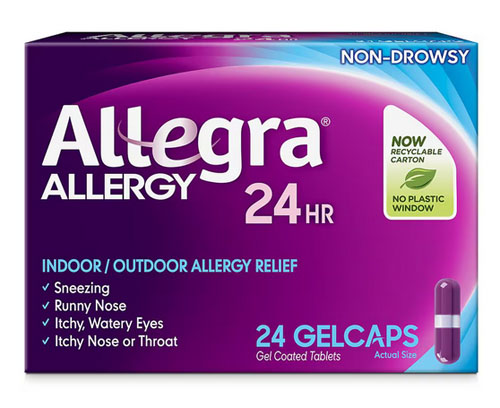
To combat the effects of this substance in the body, you can use antihistamine medication. Allegra (fexofenadine) is a well-known medication of this type. It effectively reduces the symptoms mentioned above in children and adults. The medical use of Allegra is not limited to allergies, though. It also has an application in the treatment of urticaria and other ailments. Allegra is sold as an over-the-counter product and can also be bought as a generic.
In this article, we will review in detail everything about Allegra. You will learn about its uses, recommended dose, and possible Allegra side effects. The information herein will help you decide whether this medication is appropriate. If it is, you will be able to use it safely.
What Is Allegra (Fexofenadine)?
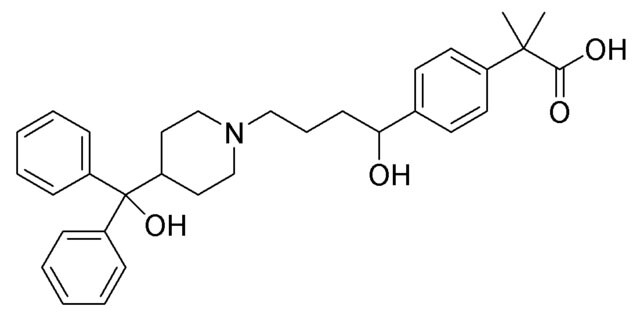
Common questions people ask are, “What is this preparation?” and “What is Allegra usually used for?” Allegra is a nondrowsy (second-generation) antihistamine medication that contains the active substance fexofenadine (C32H39NO4). This chemical compound has a molar mass of 501.667 g/mol and belongs to the group of so-called H1 blockers or H1 antagonists. Allegra is highly effective in the treatment of seasonal allergies, urticaria, and other reactions of the immune system.
Another common question is, “How long does Allegra normally take to work?” Roughly speaking, 30 minutes are enough for the medication to start working. Its effectiveness peaks between 1 hour and 2 hours after taking a dose. What does Allegra normally do during the time the effect lasts? In simple terms, this medication blocks the production of histamine in the body. Hence, it alleviates the symptoms, but it does not cure the cause.
Allegra can be used in both adults and children and is sold as an over-the-counter medication. This means that you can purchase it without a medical prescription. However, pediatric Allegra may be sold by prescription only.
When you buy this medication without a prescription, you must read and understand the directions that are included in the package. Refrain from taking the medication if you are not completely sure that you understood what the right dose for you is. If you have any doubts, you can ask the pharmacist.
Commercially, Allegra is sold as tablets. These tablets can be solid or orally disintegrating. More details about this are given in the next subsection. There is also an oral suspension, which is the pediatric dosage form. In most cases, a dose of this medication is taken twice a day. However, there is a dosage form that is taken just once a day. It is not recommended to extend its use beyond 5 consecutive days.
The last question that people commonly ask is, “What is the best antihistamine?” or “Is Allegra the best antihistamine?” Most antihistamine medications on the market are effective. They all combat the effects of histamine. However, in cases in which drowsiness must be avoided, Allegra is a better option.
Dosage Forms
As mentioned before, Allegra is sold in 3 different dosage forms. They can all be bought in practically any pharmacy. Below you will find a more detailed description of each of these commercially available dosage forms.
Tablets
Allegra is available as regular tablets with 2 different concentrations of the active substance. They are sold as over-the-counter tablets with the commercial names “12 Hour Allegra” and “24 Hour Allegra,” respectively. In both cases, the active substance is fexofenadine hydrochloride (HCl).
If you pay attention, the word “hydrochloride” was added to the name of the active substance in comparison with what was mentioned before. Let us briefly explain it. Many pharmaceutical drugs are originally synthesized as either a weak acid or a base. However, in many cases, the human body cannot effectively absorb the drug in any of these forms. Poor absorption would render the medication useless, since it would not have any therapeutic effect.
To overcome the problem of poor absorption, a drug in an acid or base form can be turned into a salt form. This is done through some chemical processes. A drug in a salt form can improve the dissolution of the medication too. Dissolution is the process through which the drug is released from the dosage form (a tablet, for instance) into the body.
Hence, pure fexofenadine is chemically converted into fexofenadine HCl to improve its water solubility as well as bioavailability. This facilitates the absorption of the antihistamine drug in the gastrointestinal tract. This enables a quick distribution of the drug via the bloodstream.
As you can infer, 12 Hour Allegra contains a lower amount of fexofenadine HCl than 24 Hour Allegra. The former contains 60 mg per tablet, whereas the latter contains 180 mg. Each tablet contains other inactive ingredients. You can read the entire list of chemical substances in each tablet on the package of this medication. 12 Hour Allegra is sold in a package with 24 tablets, whereas a package of 24 Hour Allegra contains 20 tablets.
The same concentration of 180 mg of fexofenadine HCl is available as “24 Hour Allegra Gelcaps.” This dosage form is commercially sold in a package with 24 gelcaps. The inactive ingredients are different from those of the solid tablets. Hence, to know the entire list of ingredients of this particular dosage form, you are referred to the package or the instructions therein.
Knowing the ingredients of a particular dosage form is important for different purposes. A physician can determine whether the medication is safe for you. He or she can determine if some chemicals in the medication could interact with other drugs that you are taking. Also, the possibility of suffering allergic reactions or complications can be more easily assessed.
Oral suspension
Children’s Allegra is sold as an oral suspension. As mentioned, this dosage form is not sold without a medical prescription. In this form, the active ingredient is the same, fexofenadine HCl, but the concentration is lower. This dosage form has a concentration of 30 mg per 5 ml. Besides the active ingredient, the suspension contains several inactive ingredients. As in the previous cases, for the entire list of ingredients, you should read the instructions inside the package.
Oral disintegrating tablets
For children and adults alike, there is another dosage form that allows easier ingestion and dissolution. This form is orally disintegrating tablets, which melt in the mouth. This is recommended for children who cannot swallow solid tablets. Each of these orally disintegrating tablets contains 30 mg of fexofenadine HCl. This dosage form can be bought in packages with 12 orally disintegrating tablets.
Indications
For your safety, before taking Allegra, you must be sure that you understand how you should use it. This is particularly true if you buy it without a prescription, which is possible in all pharmacies. On the other hand, if a physician prescribes it, you must take Allegra as indicated.
If you have any kidney disease, a doctor must determine whether taking fexofenadine is safe in your particular case. It is advisable to inform them about other ailments that you may have, such as diabetes. To ensure that the medication will not have any interactions, tell your physician about all other medications you are taking.
If the suspension dosage form will be given to your kid, shake the bottle vigorously first. Measure the dose in milliliters using a special tool (a measuring spoon, for example). Do not use a teaspoon or any other device that does not show whether you have the right dose. Taking a smaller dose will not have the right therapeutic effect. On the other hand, a larger dose carries the risk of overdosing.
It is advisable to take all dosage forms without food. However, the regular tablets and the suspension can be taken with food if you wish. The orally disintegrating tablets must always be taken without food and on an empty stomach.
Generally, you do not need any liquids. However, if necessary, you can drink a glass of water. Refrain from using any natural or artificial juices to take this dosage form, since they could interfere with the absorption of the active ingredient.
Dosage Considerations
If a physician prescribes Allegra, he or she will determine the best dose for you, depending on several factors. Your age, clinical condition, body weight, and response to fexofenadine will be taken into account. The physician will also recommend the best dosage form for you. However, if you opt to buy Allegra as an over-the-counter medication, then follow the directions on the package.
For the regular 12 Hour Allegra tablets, the doses should be taken as indicated below:
- Children +12 y.o. and adults must take 1 tablet every 12 hours (2 tablets a day);
- Children -12 y.o. must not use this medication;
- Adults +65 y.o. and patients with kidney problems must consult a physician to ensure that this medication is safe in their particular cases.
For the regular 24 Hour Allegra tablets, the doses should be taken as indicated below:
- Children +12 y.o. and adults must take 1 tablet every 24 hours (1 tablet a day);
- Children -12 y.o. must not use this medication;
- Adults +65 y.o. and patients with kidney problems must consult a physician to ensure that this medication is safe in their particular cases.
The last directions also apply to the 24 Hour Allegra Gelcaps.
For the oral suspension, the doses should be taken as indicated below:
- Children +12 y.o. and adults must take 10 ml every 12 hours (20 ml a day);
- Children between 2 and 12 years of age must take 5 ml every 12 hours (10 ml a day);
- Children -2 y.o., adults +65 y.o., and patients with kidney problems must consult a physician to ensure that this medication is safe in their particular cases.
For the orally disintegrating tablets, the doses should be taken as indicated below:
- Children +12 y.o. and adults must take 2 tablets every 12 hours (4 tablets a day);
- Children between 6 and 12 years of age must take 1 tablet every 12 hours (2 tablets a day);
- Children -6 y.o., adults +65 y.o., and patients with kidney problems must consult a physician to ensure that this medication is safe in their particular cases.
The orally disintegrating tablets must be taken on an empty stomach.
In all cases, do not exceed or reduce the indicated dose and do not prolong the treatment for a longer period than directed. Doing so will not give better or faster results, but can be harmful to your health. By taking a higher dose, you increase the risk of experiencing Allegra side effects. If, after the treatment, your condition does not improve (or worsens), go to the doctor immediately.
Before taking this medicine
Allegra is a safe medication in most cases. However, to reduce the risk of Allegra side effects or a severe allergic reaction, do not take it if you are allergic to fexofenadine. Also, consult a physician in the following cases.
Ask a doctor before use
If you suffer (or have suffered) from kidney disease, you must consult a physician before taking Allegra. If you are diabetic, ask the doctor if this medication is safe for you. Orally disintegrating tablets and oral suspension contain aspartame, which may not be suitable for diabetic patients. Also, inform the physician about all other medications that you are taking and whether you will undergo surgery soon.
If pregnant or breast-feeding
Let the physician know if you are pregnant or plan on being pregnant soon. There are some risks to the unborn baby if Allegra is taken during pregnancy. Hence, the physician will assess whether the benefits of using this medication justify the risks. Also, a physician must determine whether Allegra is suitable for you if you are breast-feeding. Fexofenadine can pass to the newborn baby through breast milk.
What happens if I miss a dose
If you miss a dose, you can take it as soon as you can. However, if the next dose must be taken soon, you can skip the missed one. In most cases, adhering to a rigorous schedule is not necessary. Never double a dose to compensate for a missed one. Such an action could lead to an overdose.
What happens if I overdose
If you overdose, you must seek medical help. Go to the doctor if you have a dry mouth or feel dizzy or drowsy. Seek emergency medical help if you have trouble breathing or feel like passing out. Call an emergency number or a poison control center.
How should I take Allegra?
As mentioned, in all cases, you must strictly adhere to the doctor’s directions for taking Allegra. Otherwise, follow the directions on the package of the medication. Refrain from taking any antacid within 15 minutes before and after you take any of the dosage forms. Such drugs can interfere with the absorption of the active ingredient. Likewise, do not drink any artificial or natural juice with Allegra.
The regular tablets are taken with a glass of water. Do not take them with any juice, since this will reduce the effectiveness of the tablet. Swallow the entire tablet without chewing or biting. For the liquid dosage form, shake the bottle before taking the dose.
The orally disintegrating tablets require a little more care. Follow these directions:
- Do not remove the tablet from its blister until the moment you are going to take the dose;
- When you are ready to take the dose, remove the tablet carefully to avoid damaging it. Make sure your hands are not wet when doing this;
- Place the tablet on your tongue. It will start disintegrating with your saliva, without the need for water;
- Do not chew, bite, or swallow the tablet. Let it dissolve on its own;
- Swallow as the tablet is dissolving. If you deem it necessary, you can drink some water. Do not drink any other type of liquid.
Ideally, you should take this dosage form at least 1 hour before a meal. Alternatively, you can take it 2 hours after eating.
Side Effects
Just like any other medication, Allegra can cause some unwanted effects. Some of the Allegra side effects can be mild and disappear on their own. Others, however, may need urgent medical attention. The physician who prescribes this medication always assesses the benefits versus the risks. Hence, in most cases, you will not have any Allegra side effects.
Side effects requiring immediate medical attention
You may be experiencing some mild Allegra side effects if you:
- Start coughing or have flu symptoms;
- Have fever, a headache, and/or chills;
- Have diarrhea, nausea, or any other stomach problem;
- Are drowsy or feel tired;
- Have menstrual cramps or back pain;
- Have muscle pain.
There are other possible unwanted effects that may be observed, even if they are not listed above. In most cases, these effects disappear soon and do not need any medical attention. However, if these Allegra side effects do not go away after some days, you should go to the doctor. Likewise, if any of the above conditions worsen, discontinue the use of Allegra and seek medical attention.
Side effects not requiring immediate medical attention
You should seek emergency medical attention if you observe symptoms of an Allegra allergy. Even though a serious allergic reaction (anaphylaxis) to fexofenadine is very uncommon, it is potentially fatal if it occurs. Therefore, go to the hospital straight away if:
- You get a rash, hives, or experience itching;
- You cannot breathe normally;
- Your face, lips, and/or tongue start swelling;
- You are seriously dizzy.
Call emergency services if you cannot go to the hospital immediately on your own.
What other drugs will affect Allegra?
The interaction of antacids with Allegra was already mentioned. To enable a thorough assessment, inform the doctor about any other drugs that you may be taking. These include prescription medication, non-prescription medication, dietary supplements, and herbal products. You should also inform them about any recreational drugs that you use regularly or occasionally.
Medications that cause sleepiness are of special interest in the assessment of possible interactions. You must tell the doctor if you take sleeping pills, painkillers, sedatives, and other similar drugs. Also, disclose whether you have any mental illness and take medication for it. Likewise, you must refrain from consuming drinks with high alcohol content while you are being treated with Allegra.
Storage
Allegra should always be kept out of reach of children. Store this medication in a dry place at ambient temperature between 68°F and 77°F (20°C to 25°C). Discard the medication if the blisters, carton, or bottle are open. Check the expiration date as well. Discard all medications that have already expired.