



Chancroid. Medical Symptoms and Signs of Chancroid

Description of Medical Condition
A sexually transmitted disease characterized by painful genital ulcerations and inflammatory inguinal adenopathy. It is uncommon in the United States but found worldwide. Chancroid is endemic in developing countries and a cofactor for HIV transmission. Because other sexually transmitted infections can look similar, careful clinical evaluation and laboratory testing are important whenever painful genital ulcers are present.
System(s) affected: Reproductive, Skin/Exocrine
Genetics: N/A
Incidence/Prevalence in USA: Fewer than 100 cases reported to the CDC in 2000-2002. Actual numbers are thought to be greater because of underreporting of cases.
Predominant age: Teenagers and adults
Predominant sex: Male > Female
Medical Symptoms and Signs of Disease
- Tender genital papule that ulcerates after 24 hours
- Irregular edged, painful ulcer(s)
- Ulcers may be 1 mm to 5 cm in size
- Ulcers may occur on the shaft of the penis, glans and meatus in men
- Ulcers in women most commonly occur in labia majora but also seen in labia minora, perineum, thigh, and cervix
- Painful inguinal adenopathy with abscess (bubo) formation in 30% of patients
- Atypical presentations include folliculitis and foreskin abscess
Symptoms often develop within days to a few weeks after exposure. The combination of a painful genital ulcer and tender inguinal lymphadenopathy should prompt strong consideration of chancroid, along with testing for other sexually transmitted infections.
| Feature | Description |
|---|---|
| Primary genital lesion | Tender papule that rapidly progresses to a painful ulcer with irregular edges |
| Ulcer characteristics | Can range from 1 mm to 5 cm, often multiple, with undermined, nonindurated borders |
| Common sites in men | Shaft of the penis, glans, and urethral meatus |
| Common sites in women | Labia majora and labia minora; may also involve perineum, thigh, and cervix |
| Lymph node involvement | Painful inguinal adenopathy; buboes with abscess formation in about 30% of patients |
| Atypical presentations | Folliculitis-like lesions, foreskin abscess |
What Causes Disease?
Haemophilus ducreyi (gram-negative bacterium)
Risk Factors
- Multiple sexual partners
- Uncircumcised males
- Prostitutes often are carriers
Risk is higher in settings with limited access to preventive services and where other sexually transmitted infections, including HIV, are common.
Diagnosis of Disease
Differential Diagnosis
- Syphilis
- Herpes simplex virus (HSV 1 and 2)
- Lymphogranuloma venereum (LGV)
- Granuloma inguinale
Because several sexually transmitted infections can cause genital ulcers, laboratory testing is essential to distinguish among these conditions and to guide appropriate therapy.
Laboratory
Serologic testing for antibodies using an ELISA technique. Gram stain and culture of the organism on Mueller-Hinton agar with incorporated vancomycin. Polymerase chain reaction (PCR), where available.
Drugs that may alter lab results: Previous antibiotic therapy
Disorders that may alter lab results: None expected
Pathological Findings
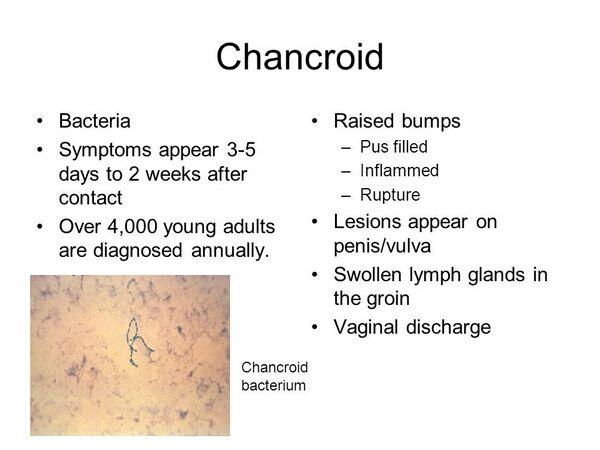
"School of fish" pattern on Gram stain
Diagnostic Procedures
- Gram stain and culture of ulcer exudate
- Aspiration of inguinal bubo (lymph node)
- PCR testing of ulcer exudate for H. ducreyi DNA
- Dark-field examinations of exudate to rule out Treponema pallidum
- Culture or PCR testing for HSV
Combining clinical findings with targeted laboratory tests helps confirm the diagnosis of chancroid and exclude other causes of genital ulcer disease.
Treatment (Medical Therapy)
Appropriate Health Care
Outpatient treatment. Most patients can be managed in an ambulatory setting with close follow-up.
General Measures
- Saline or Burow's solution soaks to ulcers
- Aspiration of buboes if greater than about 2 inches (5 cm); done through adjacent uninvolved skin
Gentle local care can reduce discomfort and help ulcers heal while systemic therapy is working.
Activity
Refrain from sexual intercourse until genital lesions have fully resolved.
Patient Education
- Sexual counseling
- Use of condoms
- Local wound care
- Treatment of all sexual partners with the same regimen as the index case
- HIV testing
Patients should be encouraged to notify recent sexual partners so they can be evaluated, tested, and treated as indicated. Open discussion about safer sex practices helps reduce the risk of recurrent infection.
Medications (Drugs, Medicines)
Drug(s) of Choice
- Azithromycin 1 g po single dose (more expensive than other treatments)
- Ceftriaxone 250 mg IM single dose
- Ciprofloxacin 500 mg po bid for 3 days or other quinolone
- Erythromycin base 500 mg qid x 7 days
Recommended regimens are generally short and effective. Specific drug choice may depend on local resistance patterns, cost, pregnancy status, and potential drug interactions.
| Medication | Typical regimen | Key considerations |
|---|---|---|
| Azithromycin | 1 g by mouth, single dose | Convenient single-dose therapy; noted to be more expensive than other options |
| Ceftriaxone | 250 mg intramuscular, single dose | Parenteral single-dose regimen; useful when adherence to oral therapy is uncertain |
| Ciprofloxacin | 500 mg by mouth twice daily for 3 days | Avoid in pregnancy, during lactation, and in patients younger than 18 years |
| Erythromycin base | 500 mg by mouth four times daily for 7 days | Longer course; gastrointestinal side effects may limit tolerance in some patients |
Contraindications:
- Allergy to the medication
- Ciprofloxacin in pregnancy and lactation, and patients less than age 18
Precautions: Refer to manufacturer's profile of each drug
Significant possible interactions: Refer to manufacturer's profile of each drug
Alternative Drugs
N/A
Patient Monitoring
- Patient followed until all clinical signs of infection resolved
- Should see symptomatic improvement within 3 days and objective improvement by day 7
- Baseline syphilis serology and at 3 months
- HIV testing at baseline and at 3 months post-treatment
Lack of clinical improvement should prompt reassessment for alternative diagnoses, drug resistance, reinfection, or problems with adherence.
Prevention / Avoidance
Avoidance of sexual activity until ulcers resolved.
Possible Complications
- Phimosis
- Balanoposthitis
- Rupture of buboes with fistula formation and scarring
Prompt diagnosis and treatment help reduce the risk of long-term scarring and functional problems.
Expected Course / Prognosis
- Full clinical resolution with appropriate treatment
- 5% relapse after treatment
- Primary infection is not believed to provide immunity
Because prior infection does not appear to confer protection, ongoing risk-reduction counseling remains important even after successful treatment.
Miscellaneous
Associated Conditions
- Syphilis - concurrently in 10% of patients (per new CDC data)
- HSV or HIV infection
Coexisting sexually transmitted infections are common and should be actively evaluated and treated.
Age-Related Factors
N/A
Pediatric: N/A
Geriatric: N/A
Others: HIV disease may affect treatment response
Pregnancy
Maternal to infant transmission has not been reported.
Synonyms
- Soft chancre
- Ulcus molle
International Classification of Diseases
099.0 Chancroid
Other Notes
Chancroid has been shown to be an established risk factor for acquisition of HIV infection.